That was
a really extreme beginning for the Extreme Approaches event.
Everyone of us made it but in some moments the situation seemed to
be a bit dangerous. Besides Polish guys we also had American and
Israelian pilots. Although category D aircrafts were redirected to
another London airports, EGLC was crowded anyway. Honestly I did a
big mistake regarding my speed on a steep glideslope. Earlier I got
an instruction to keep 300kts so I wasn't sure when can I slow down.
I did it to late and was put on the 5* glideslope with something
around 190kts and flaps 15 instead of about 150kts and flaps 30...
Of course that was my fault, I should begin my decceleration much
earlier. My touchdown speed was much higher then 130kias (usually it
is around 115 with flaps 40). The ground impact was quite big but
nothing really bad happened. I slew down with autobrakes on 3,
turned left to A and went to stand 8. Our 40 passengers did not look
very satisfied... Tomorrow I need to arrange some tech guys to check
the gear system and the whole undercarriage.
Our trip
started in London City airport - same stands, same weather. Just
watch the video - it explains everything. Six aircrafts took part in
this flight and all of them completed it succesfully. We had a nice
time with some voice available on 122.550 . The weather in
Narsarsuaq was good and sun was still above the horizon, so our
landing was quite easy. No problems occur during the flight. My 40
passengers went to a nearby village and I stayed in the airport with
other pilots (we were trying to make a party but we were just to
tired so we went to sleep).
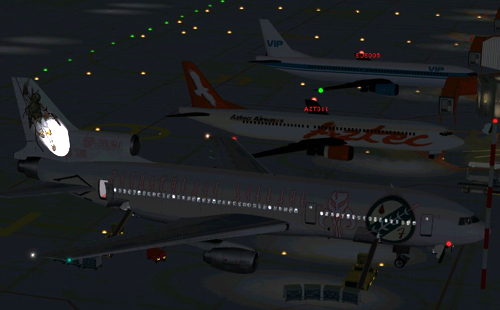
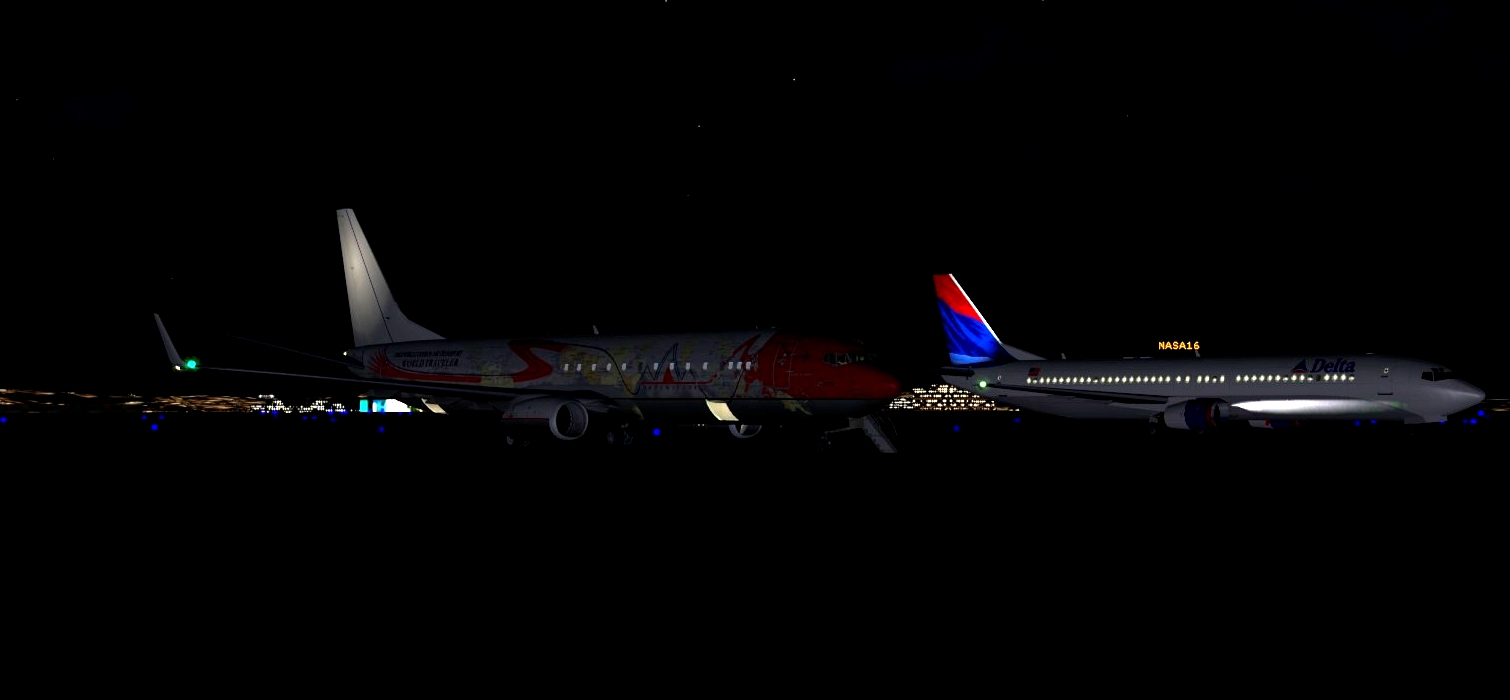
On the apron in London, all of us ready for
departure. TCAS view of Narsarsuaq on the right side.
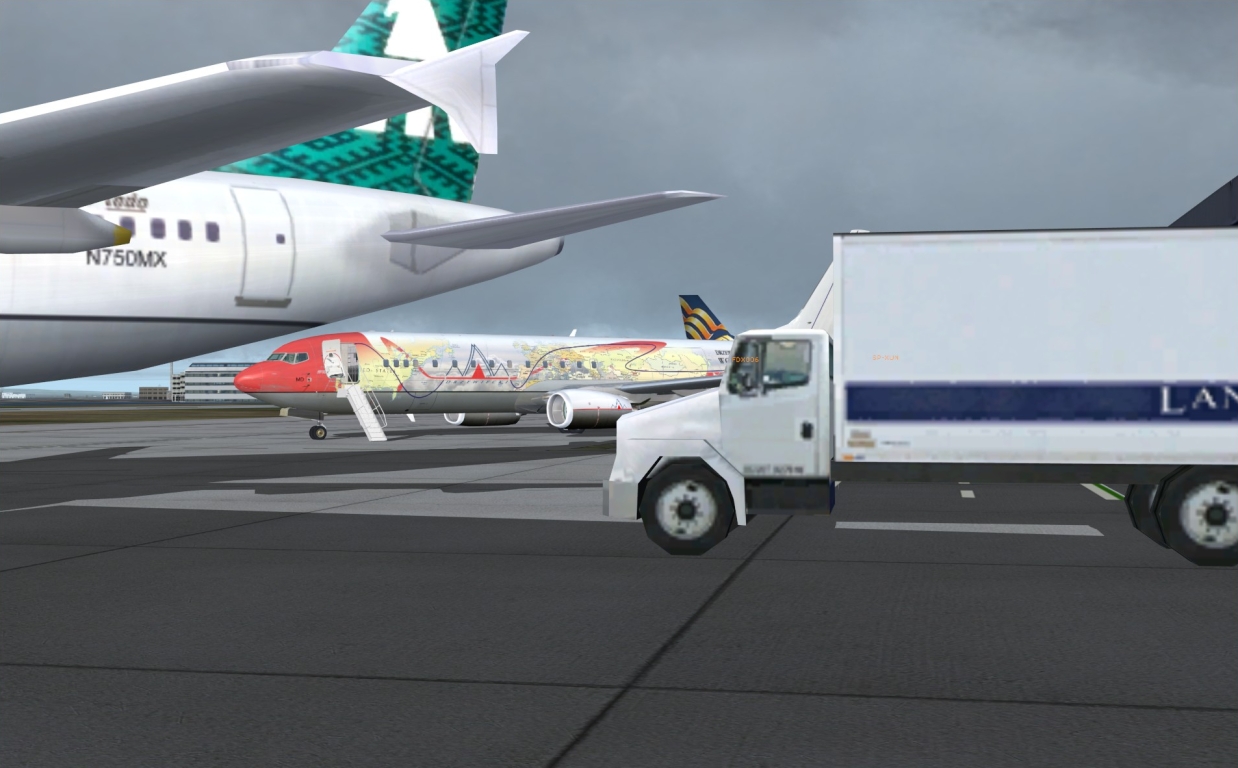
American pilot flying MD11 and Narsarsuaq apron on
the right. FedEx in the background.
This was
a hard staff. We took off from Narsarsuaq at 2030 Zulu in a nice
weather and a light headwind. We headed towards Sondrestrom and then
north to the North Pole. There were 4 aircrafts flying, including
two MD11s. All the way to the North Pole the weather was good with a
light crosswind. Problems started when approaching the North Pole.
Although our route did not go exactly over the North Pole, magnetic
anomalies were so strong that our navigation equipment became
totally crazy. Even simple "direct FIX" commands stoped working
properly. Moreover other pilots got some serious issues with AP and
even with engines and control surfaces. While trying to establish my
position and heading, I lost communication with other guys and
actually had no information if they made it thru the North Pole or
not. Finally I managed to escape that damned area and as soon as I
did that, I realised, that with the current fuel consumption I had
no chance to get to the destination airport. I quickly made some
calculations, reduced my speed to Mach 0.70. This gave me fuel
reserve for 15 minuts of flight however that was still 30 minutes
less than the required minimum. During next 3 hours I was regularly
checking the fuel consuption. In Narsarsuaq we loaded 100% of fuel
including two extra tanks installed in the center section of the
fuselage of our aircraft (57764 lbs). About 150nm from the airport a
headwind started to blow and decreased my extra flight time to an
amount I don't even wan't to write here. I slew down to 0.62Ma and
then to 220KIAS. I have prepared to proceed OKARU 4A standard
arrival route and ILS 2NDB approach to runway 23L - this was
probably the shortest possible route for arrival. I made a succesful
landing at 0430 Zulu time after 8 hours and 45 minutes of flight
including the preflight briefing. There was only 1850 lbs fuel left.
Here is a very short video from my landing and some pictures:
Landing in UEEE Yakutsk, Russia
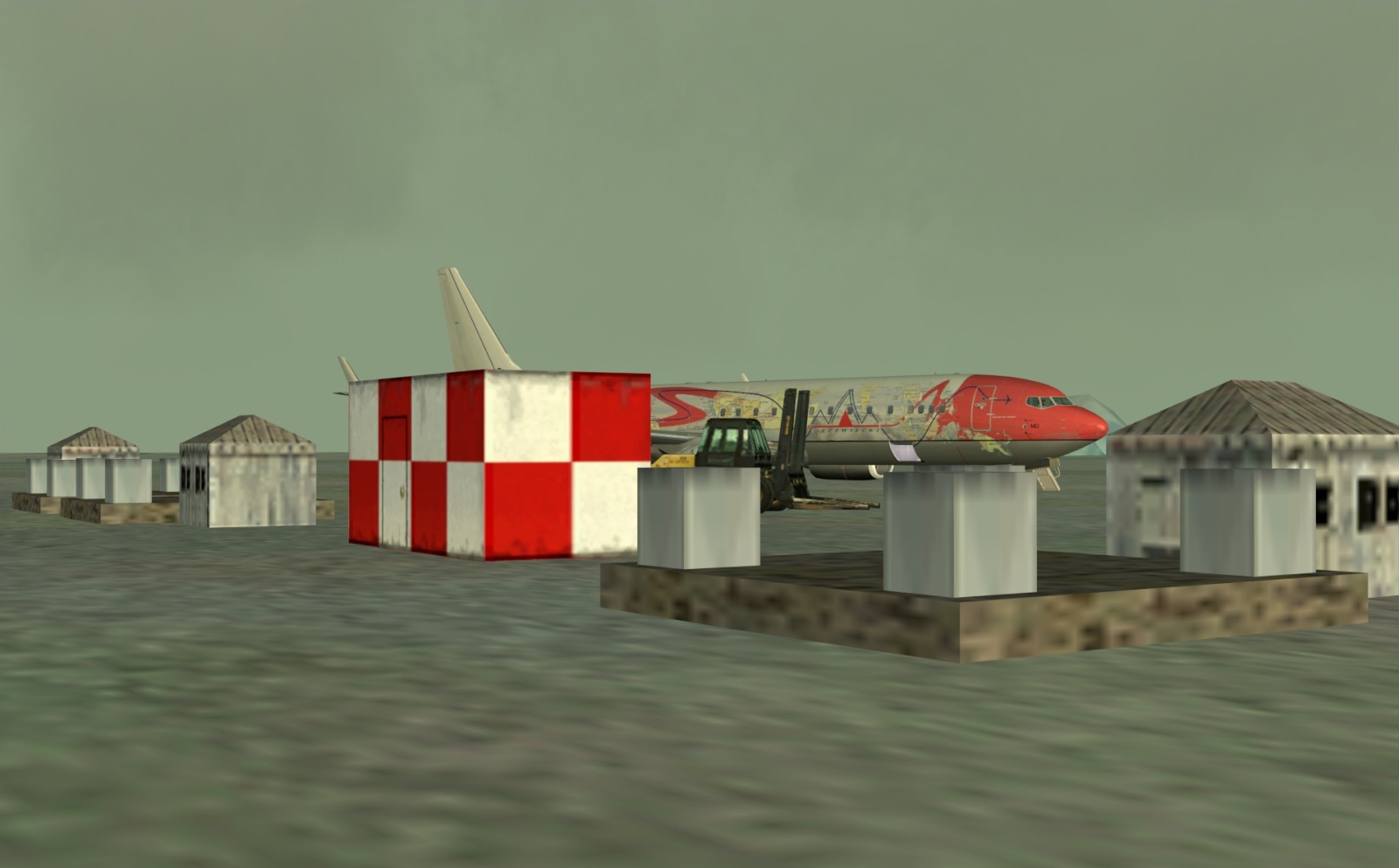
On parking in BGBW Narsarsuaq
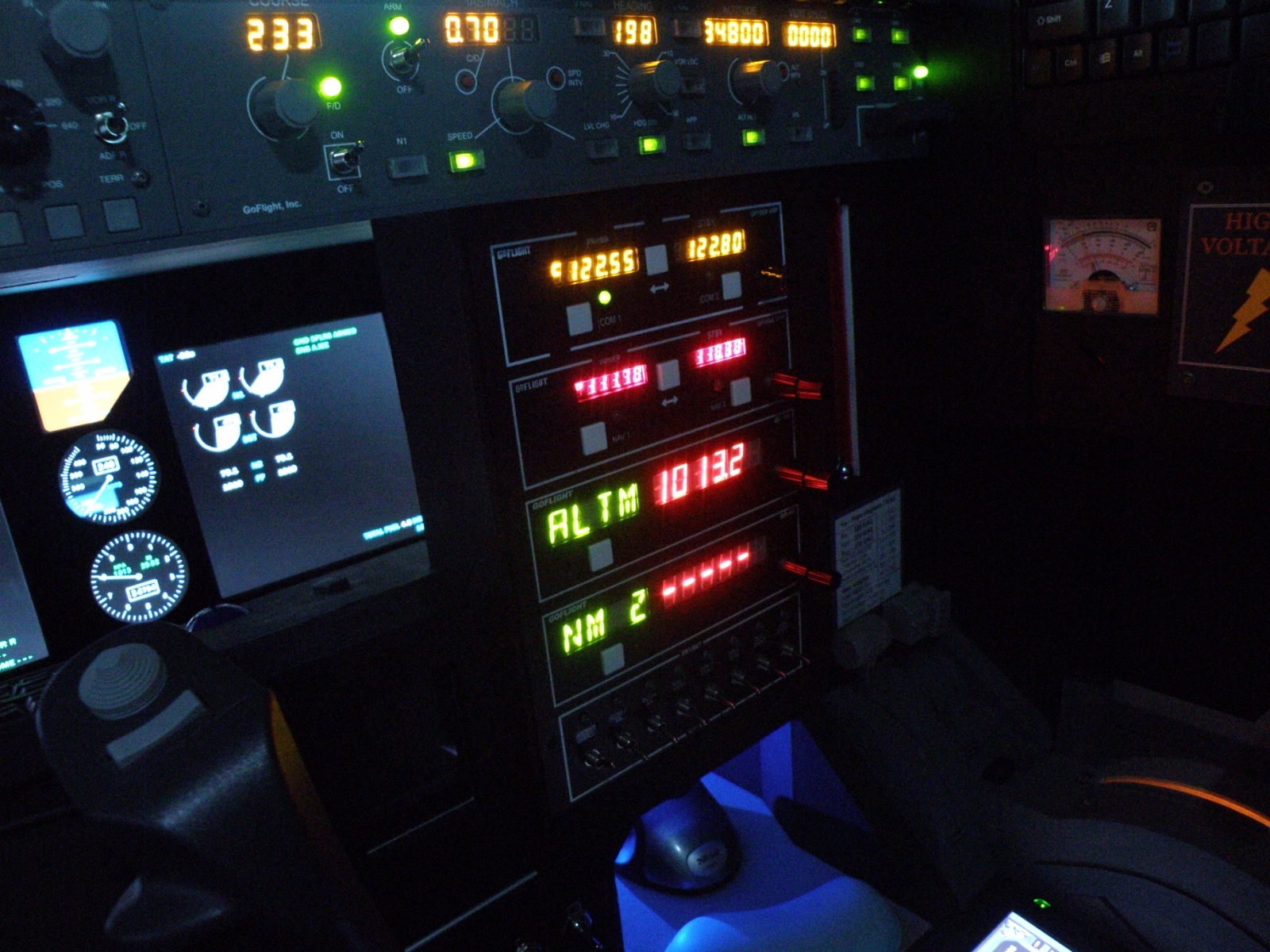
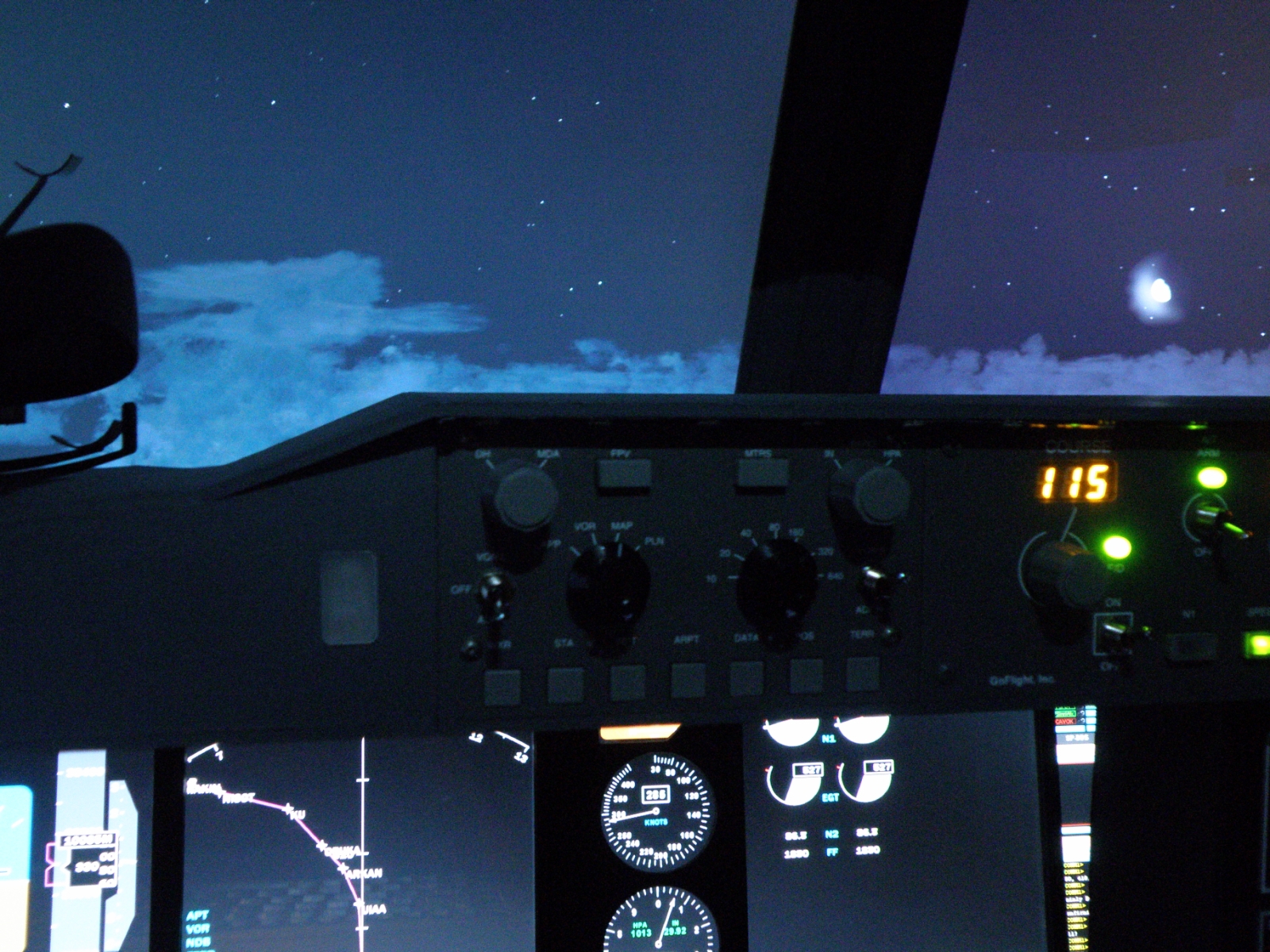
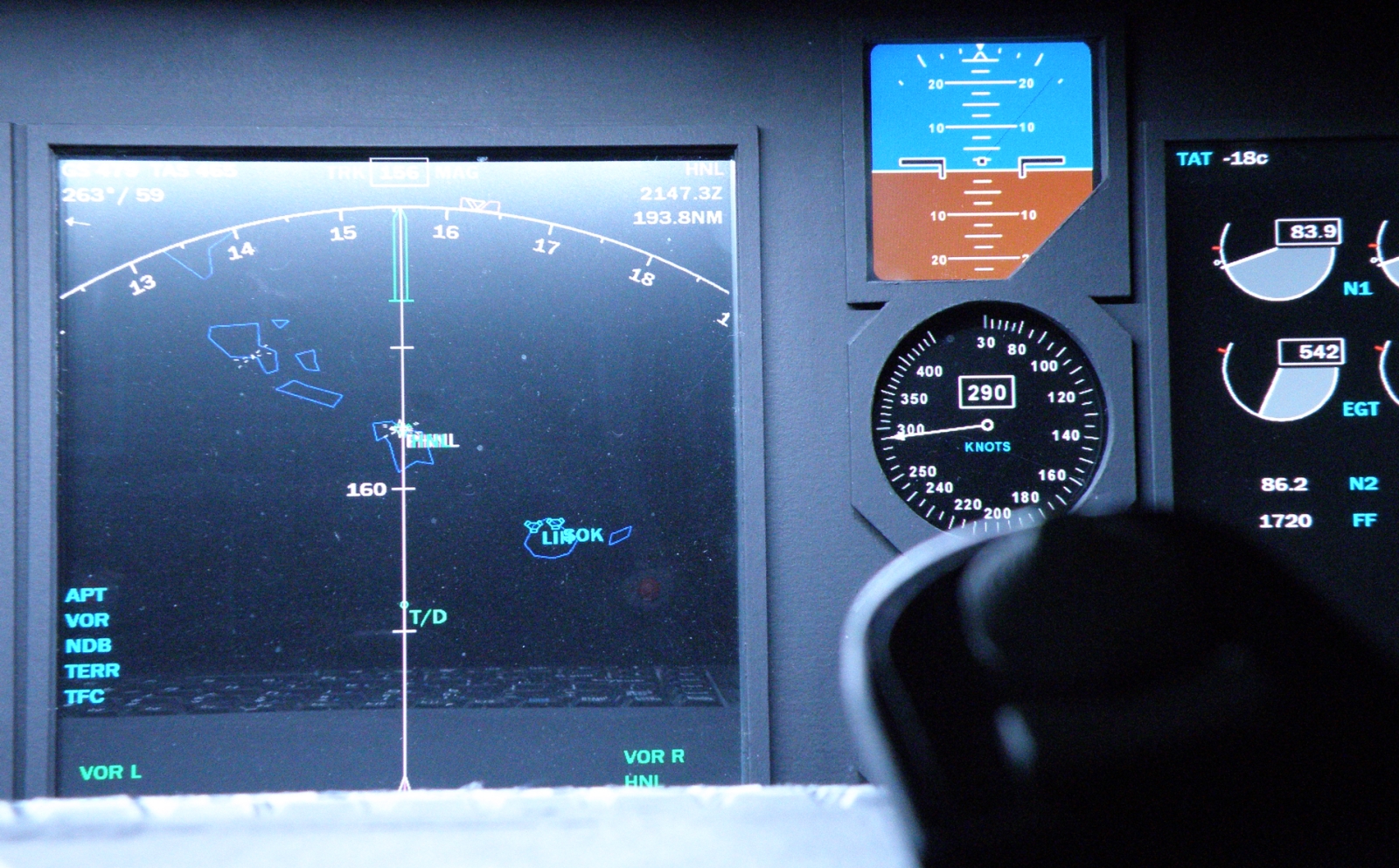
Some cockpit pictures during Yakutsk approach
And here is one photo made right after landing in
Yakutsk
When I
arrived at the airport it was -17 degrees Celsius. We got some hot
tea from very nice guys from the ground staff and than we started
our aircraft preparation. After that deicing was performed and we
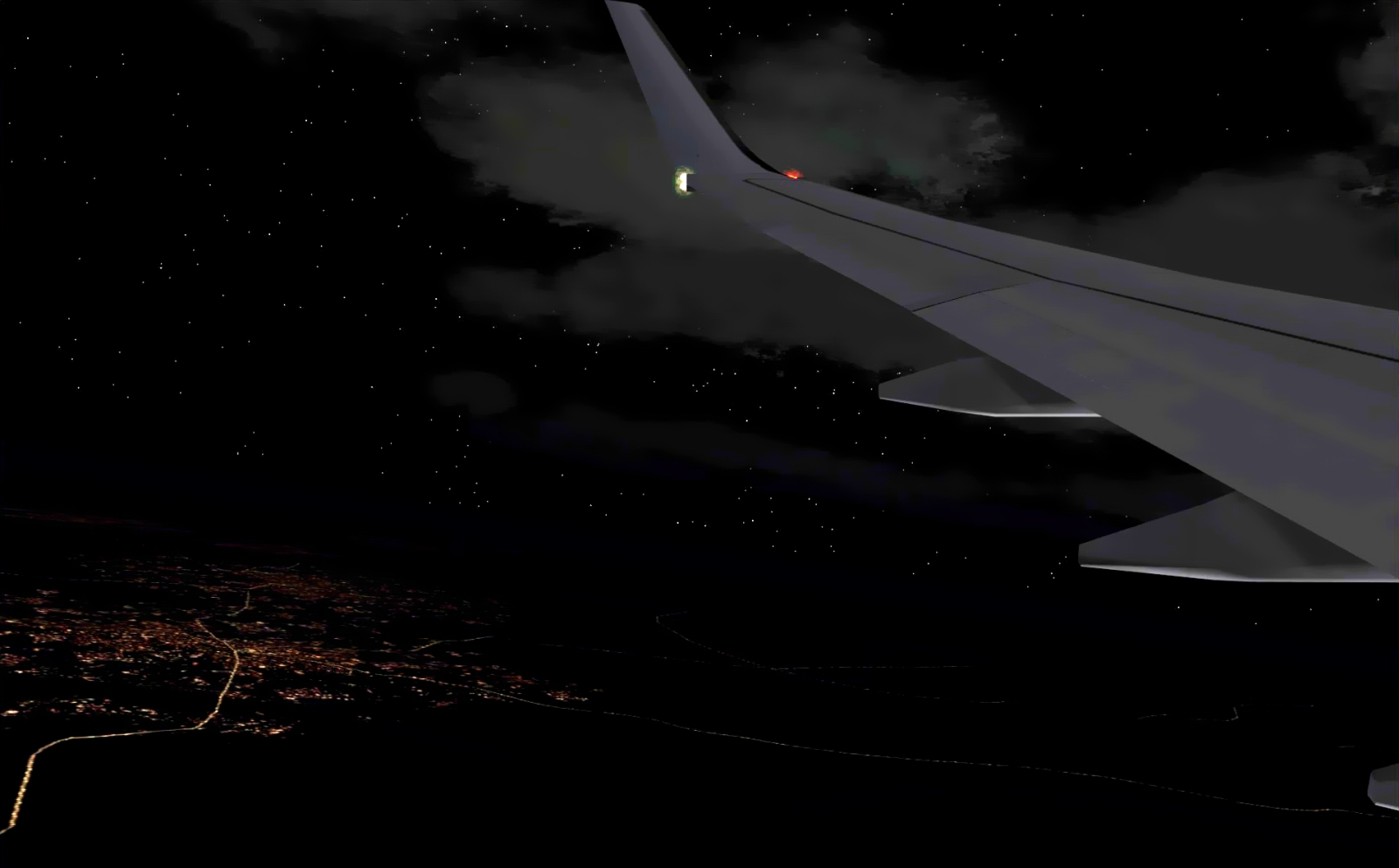
got ready for departure at the planned time. It was dark and after
take-off it seemed like we were flying in the space - only some
stars on the sky were visible. No cities, no roads on the ground...
just darkness. It was a nice flight unless I checked current weather
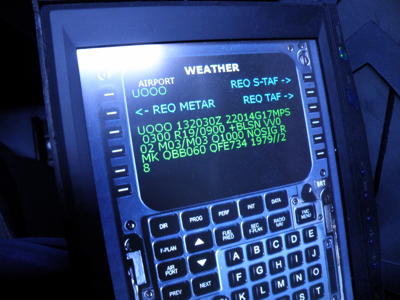
conditions in Norilsk airport:
Norilsk weather
This was
quite extreme - especially winds (gusts to 33knots) and visibility
(300m or less). Simply a snow storm. We made a standard ILS approach
as published in charts and then managed to land on runway 19. After
the plane stopped I realised, that landing was not as difficult as
taxiing in a total fog with almost zero visibility... Anyway we made
it to the terminal. After we parked and unloaded our passengers and
cargo, ATC guys invited us to see the tower and drink something...
How could we refuse? Here is a picture of our aircraft made from the
tower.
The
flight to Krasnoyarsk seemed to be so short after all those long
hauls. The weather in Norilsk was quite the same as yestarday -
winds and very low visibility. Unfortunately the "Tristar guy" had a
major problems with his aircraft and couldn't fly with us. He
decided to leave it as a donation to the Norilsk ground staff and
ordered a new Boeing jet. We took-off normally and flew the whole
route as planned. There was no wind and CAVOK in UNKL. We landed
safely (as always!) and parked right next to the terminal. Somehow
batteries in my camera were gone so I could not make any pictures.
Sorry!
I woke up
after a really cold night in an apartment at the airport. Just
before this flight we got a message from some authorities that our
round-the-world trip was organized illegaly and as soon as we get
the US we will be arrested and put into a prison. Krasnoyarsk staff
received this message too so they decided to make a big party for
all WF2009EA participants. Another Americal pilot from NASA joined
us so the weather in UNKL didn't seem so cold anymore. ATC guys were
already at the party since last week, so they couldn't provide us
any ATC service that day. We departured as filed. The darkness
shocked me again. Usually after take-off you see something on the
ground, at least some water reflections or road lights. There is
nothing like this in Siberia. Cities are so rare that if you see one
you are a lucky man! Although I didn't see any of them during that
flight I got a 70kts tailwind so we saved a lot of fuel. That was
rather "economy" than "luck" but I guess it is better to have one of
those than none. We landed in Irkutsk right after the NASA pilot and
right before the executive jet that was flying with WF2009EA group
since the very beginning. I don't know the guy very well yet as he
did not attend to the parties so far. There was also a Tristar guy
but he couldn't fly with us due to some major technical problems
with his aircraft. He will probably leave it as a donation for the
Siberian ground staff, which was really great. After landing in
Irkutsk I received a call from my PR guy that the information about
a prison is false, everything is legal in our event and I should not
worry. It is easy to guess that we had to make another party to
celebrate that. ATC in Irkutsk was abscent too so we just joined the
ground staff.
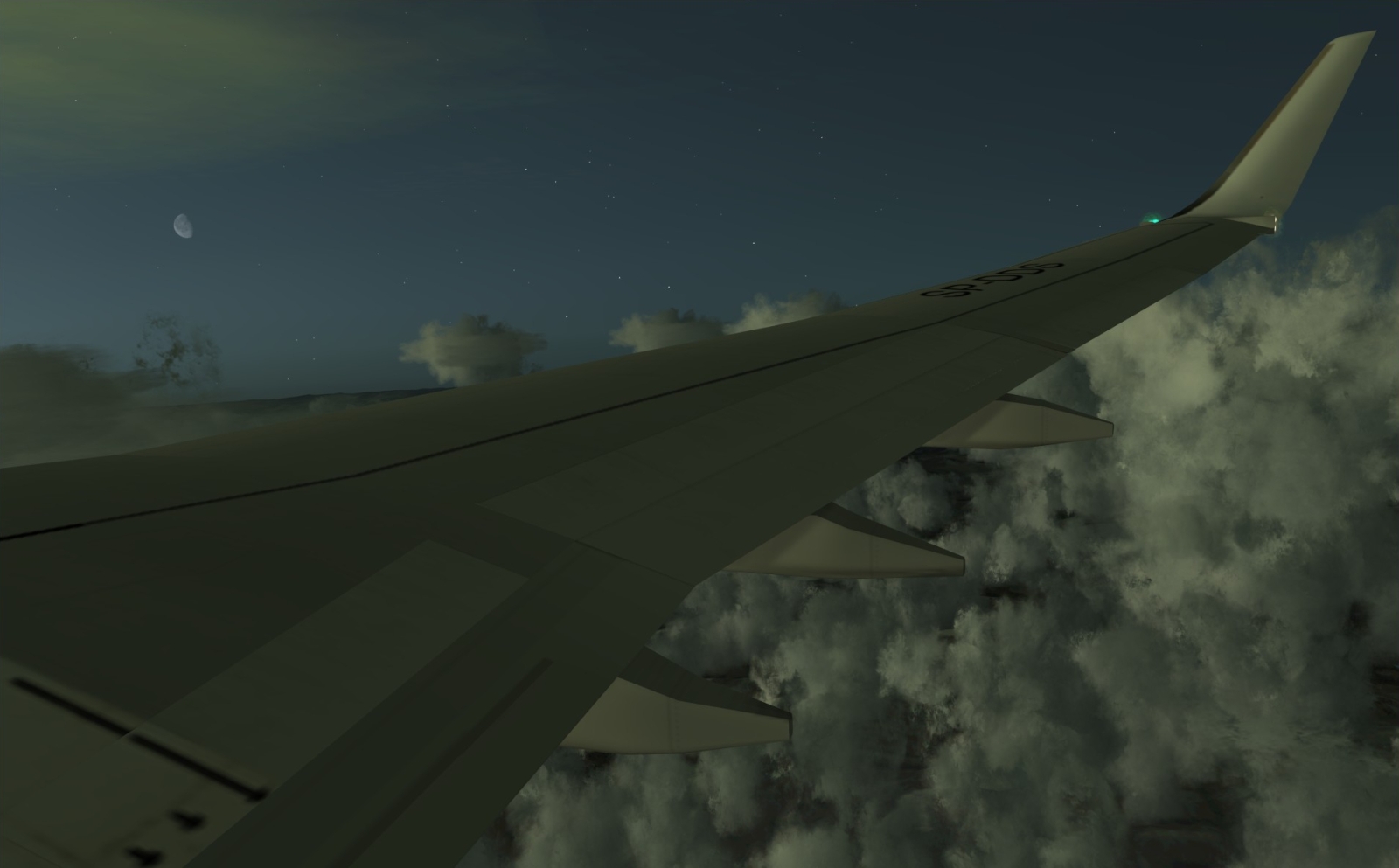
In-flight cockpit view and some picture from the
apron in Irkutsk
This was
a nice, quiet flight. We took-off in a darkness and arrived at
Yakutsk during sunrise. Two English gentlemen joined us for this
leg. The weather was good in both airports and there were strong
eastbound winds so we had a tailwind again (around 80kts).
Passenger's view of Yakutsk approach and Lena river
This time
we were asked by Yakutsk staff to transport a small but very
valuable military equipment to UHPP. Obviously we agreed however
some anonymous individuals tried to prevent that (including
unsuccesful burglary and hacking attempt). We were flying together
with NASA guy, UPS MD-11 and the Cessna executive jet. In the middle
of our flight my AP suddenly disengaged and an elevator trimmer
started to change its setting itself. The plane started to descend
quite rapidly. I switched the flight director and A/T off and
managed to maintain a stabilized flight around flight level 300. We
got even a little overspeed but fortunately no damage accured to the
aircraft's structure. I checked all main systems before switching
back to AP but everything seemed to work normally. After AP engaging
our aircraft went back to FL330 and continued until the T/D. The
rest of the flight went normally. The approach in Petropavlovsk was
really fabulous - with all those high volcanos and water. Just look
at the video below. I liked also the airport itself. While all other
visited Russian airports looked more like a military staff, this one
had a cute civil terminal with a beautiful Orthodox chapel (look at
my photos).
It was an
early morning when we departured from Petropavlovsk-Kamchatsky
airport. Of course ATC guys were still sleeping. During last night a
Boeing 747-400 from Aztec Airways arrived to UHPP and when I started
my aircraft preparation Aztec pilots were still walking outside and
checking the plane. There was also a Citation X pilot but he got a
good offer for a VIP transport to Tokyo Haneda so he went there
instead of Hawaii. Our 40 passengers arrived a little bit to late
but we managed to take-off in time. As soon as we got to our cruise
altitude (FL330) we contacted Honolulu Radio - an oceanic type ATC
that provides a procedural service above the north Pacific Ocean
area. We had to regularly make position reports the same as it is
done when flying NATs (North Atlantic Tracks). After an hour of
flight a sunrise began. We had very good wind - over 70kts tailwind.
In the middle of the route we received a message that there is a
Speedbird (British Airways) Boeing 767 flying from San Francisco to
join us in Honolulu and the NASA plane departing from UHPP with a
delay. After 6 hours of flight we were switched to Honolulu Center
which directed us towards HNL VOR. We were expecting LDA/DME rwy 26L
approach but instead we got just vectors and visual rwy 26L due to a
large amount of traffic (the weather was very good though). Check
the video below to see our landing. In my opinion Honolulu 26L
approach is one of the most beautiful approaches in the world.
UHPP-PHNL including the Honolulu approach & landing
rwy 26L
After we
arrived at Honolulu we spent a great day with guys at the city -
eating, dancing and having fun! When we got back to the airport at
5am local time, nobody was there yet. We had a cup of cofee and
started our aircraft preparation. Everything seemed to work fine, as
usually. After a short time we got a message from other pilots that
they have decided to stay here in Honolulu for another couple days.
I also got a message that the "Tristar guy" received a new aircraft
the last night and will be flying from Norilsk to meet us in
Anchorage. During preflight checklists I discovered some problems
with our radio and electrical systems. All technicians were out at
that time so I made some repairs myself and got a positive result.
However due to that problems I had an hour delay. As soon as I
took-off I got an alert concerning the electrical failure in our
aircraft and flaps, gear and elevator trimmer inoperation. Although
I managed to retract gear manually and control elev trim with a
switch in my yoke and AP, there was no way to gain the control of
flaps. They were up and blocked in that position. I decided to
proceed our route and make an emergency landing in Anchorage. Its on
the video below so no more comments here - you can simply watch a
movie. The "Tristar guy" arrived in his new 767 aircraft 10 minuter
before me and was making some pictures of my landing as well. I will
call him "XUN" since now - this is a part of his callsign.
It was a
beautiful Monday morning with almost CAVOK and crispy air. All
electrical problems with our aircraft were instantly repaired and we
were ready to continue our route. We departed on time from runway
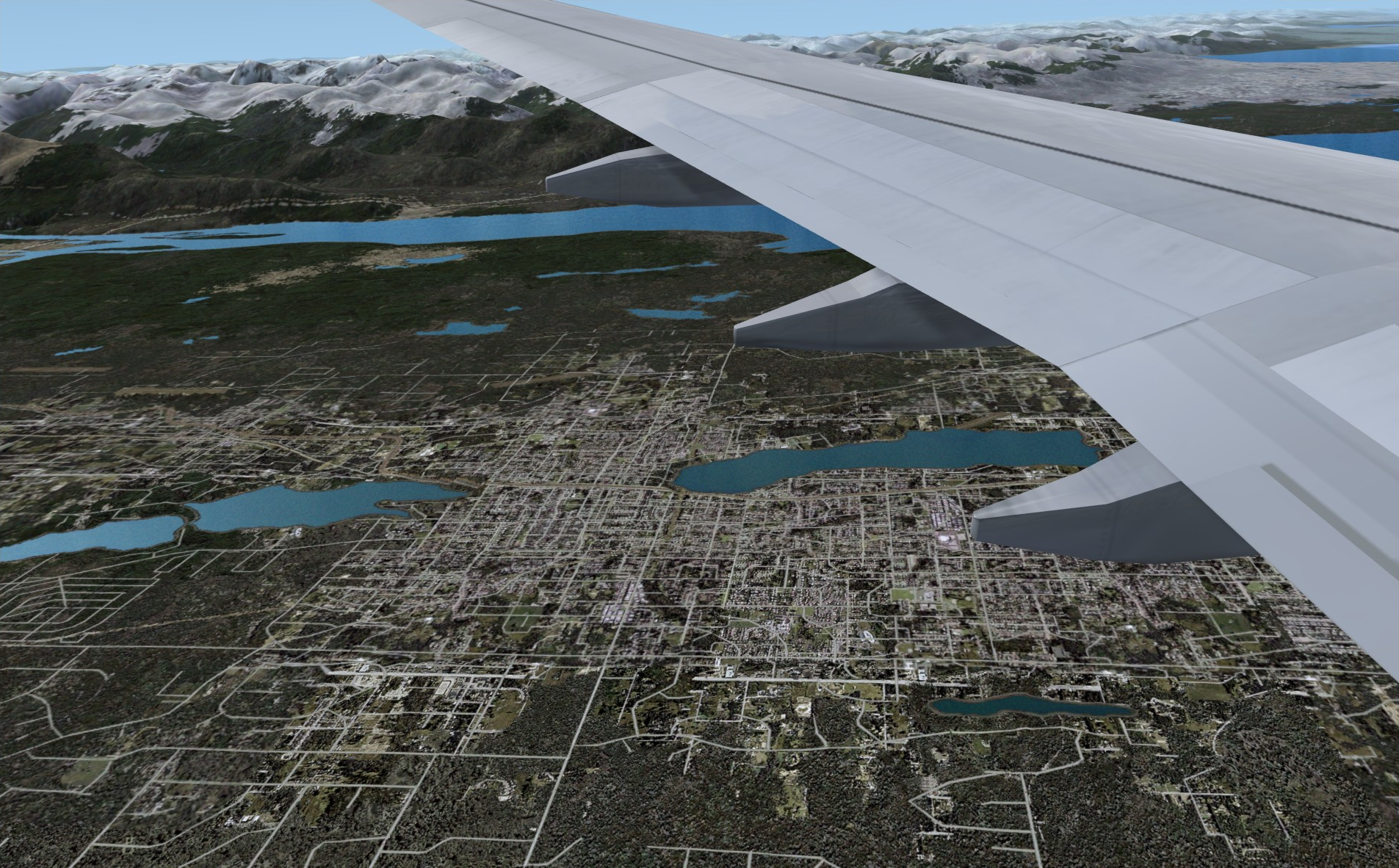
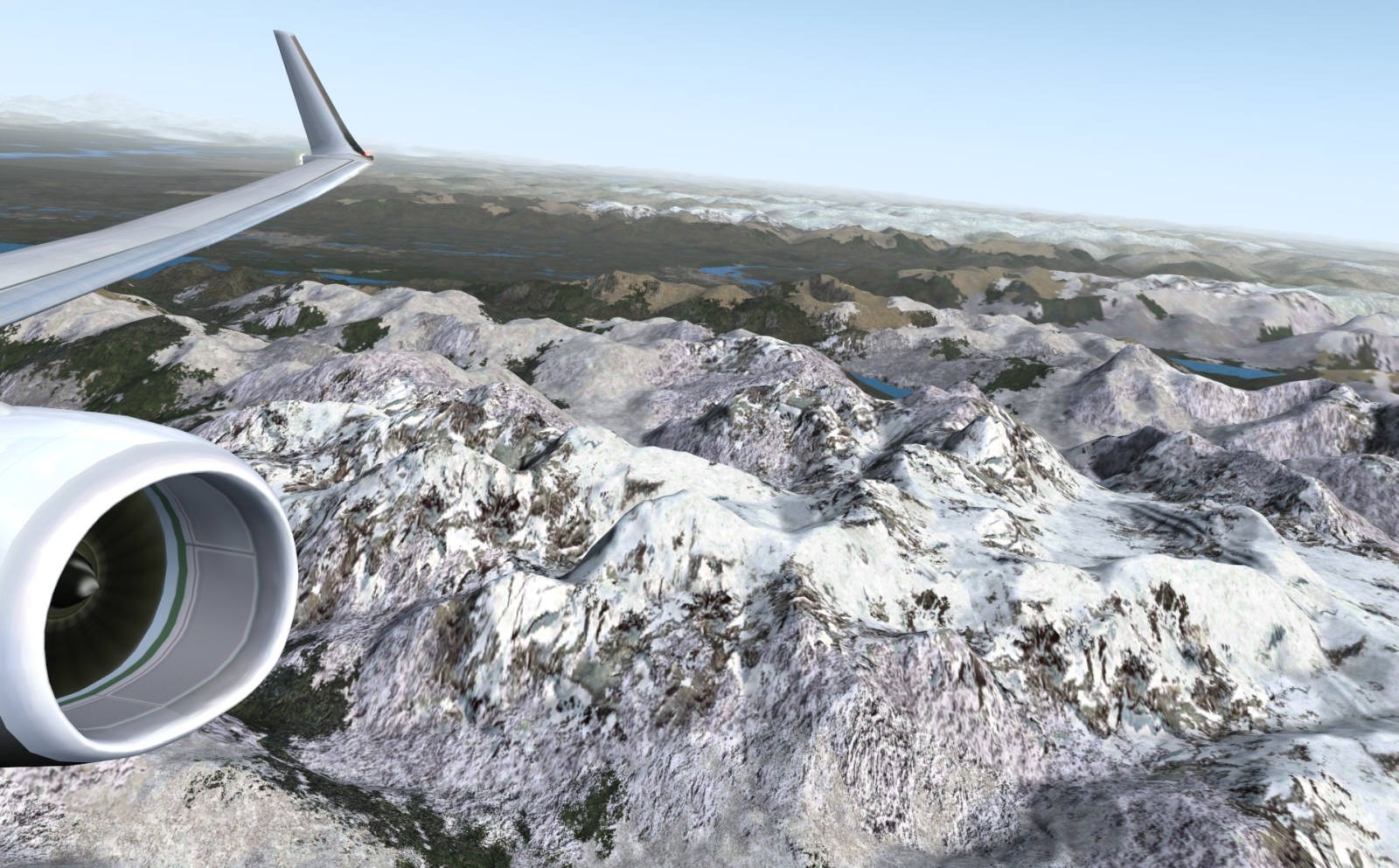
25R and turned north to BGQ VOR. Alaskan scenery was really
outstanding with all those small and large lakes and mountains
covered by snow. It was a really short hop this time - only 300nm. I
made a RNAV/ILS approach to runway 1L and landed safely in
Fairbanks. XUN landed right after me and we both parked at the
terminal. There were hundrieds of private general aviation aircrafts
on the other side of the field and a nice water runway in the middle
for float planes (I suggested XUN to land there but he wasn't brave
enough).
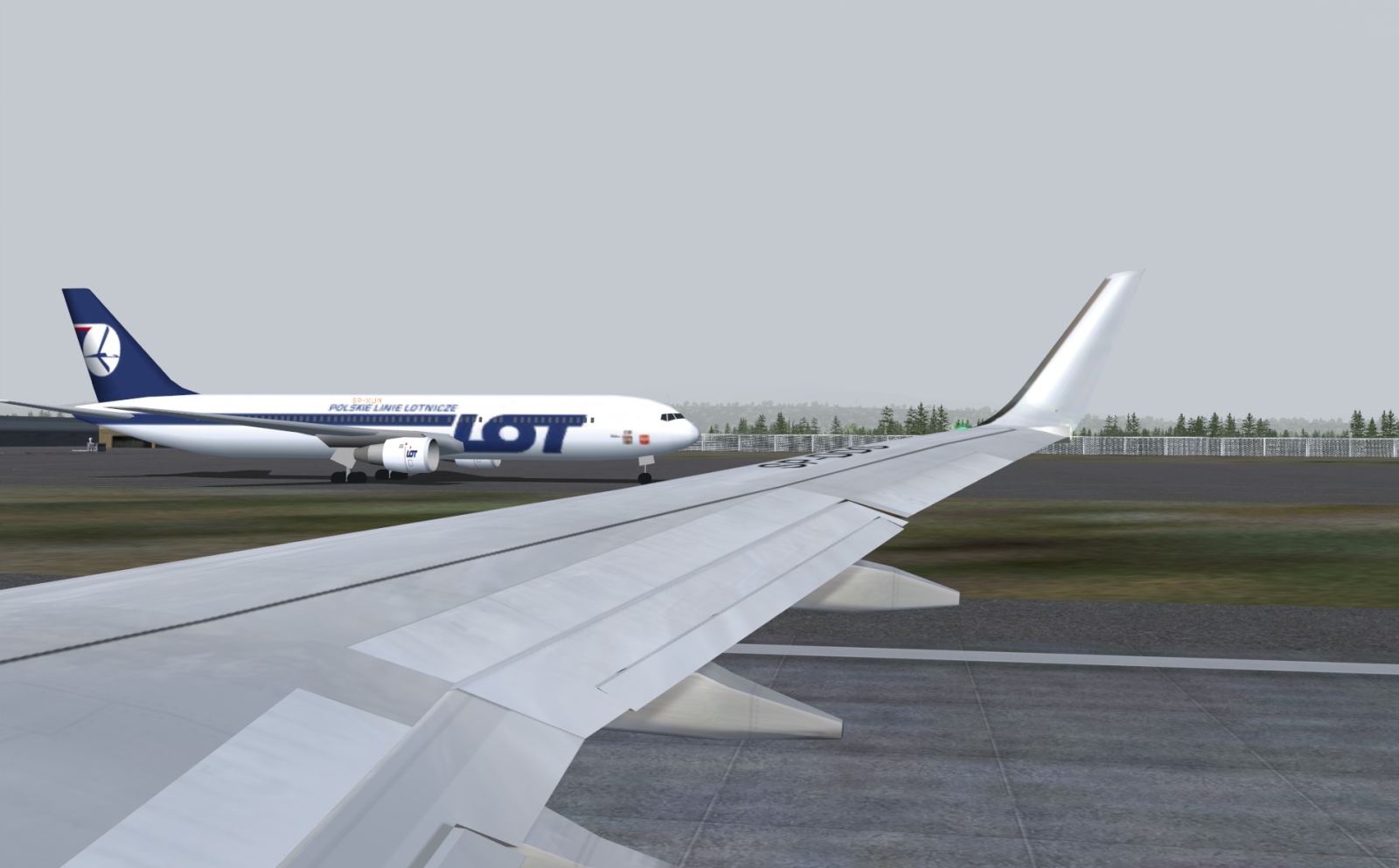
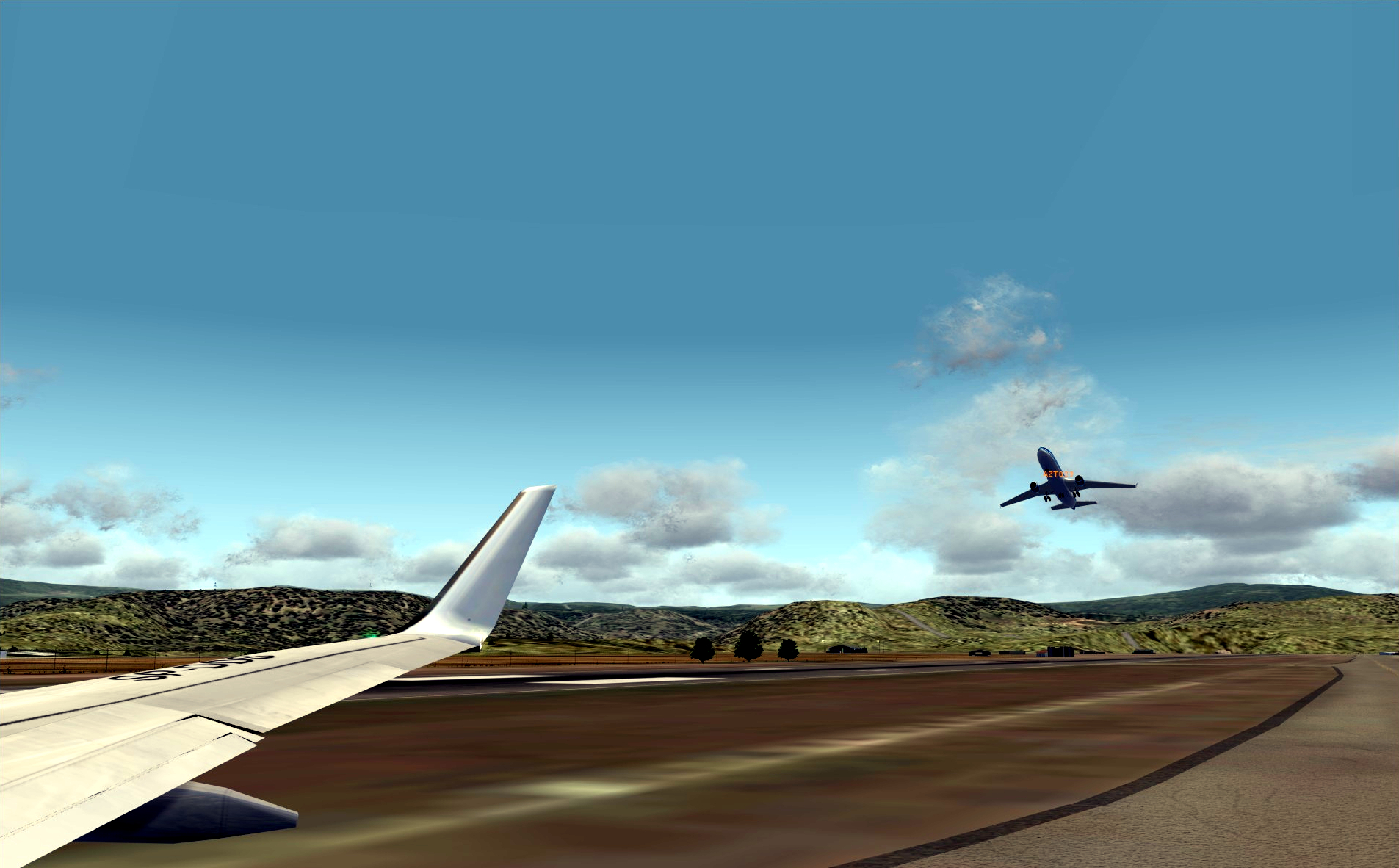
Apron and north departure from Anchorage PANC.
Photos from PAFA Fairbanks. Bottom left - B763 while
landing, bottom middle - picture of us made by a GA aircraft flying
over the field, bottom right - at the gate next to B763.
Next day
we woke up early and started to prepare our aircrafts to the next
flight. It was a really short route (less than 200nm). The weather
was beautiful, no wind and 15 degrees Celsius. I took-off first and
climbed FL220. XUN departed right after me. Half an hour later we
were approaching a small airfield beautifully located next to a nice
river. The gravel runway was only 5200ft long and surrounded by
large trees. I performed a traffic pattern and than tried to land,
however I made it to high and to fast. The aircraft touched the
runway but I had to go around. The second time was much better. I
slew down with autobrakes max and turned right to the apron. Many
people were waiting for us and taking photos. I parked next to the
small terminal building and cut the fuel. Three minutes later XUN
parked next to me. All our passengers went out of the plane and were
warmly welcomed by the local people. Obviously captains left their
vessels at the end. We were invited for a dinner and a party right
away. A nice lady with a blue scarf (on photos below) proposed us to
visit the city and surroundings. She was a secretary of the
airport's manager who was traveling somewhere far away. We left our
planes, ordered fuel for the next day and went to the city to have
some rest. This rest was really needed because the next flight from
our route was one of the most dangerous of all.
We spent
a great time here in Bettles. Local people were wonderful as well as
the weather. We arrived at the airport around 10am local time and
started to prepare for our 13th flight of our world route. It was
one of the most difficult and dangerous approach so I took a camera
with me and made a video. It explains everything so you may simply
watch it! The video includes a local spotter's recording of our
landing. There are also some photos below. Our touchdown speed was
108kts. After the landing we parked next to a hangar and were taken
to the city center on a bus. We had an appartment rented as we
planned to stay here for 3 days.
Klondike city on the left side and Dawson City
airport apron (XUN arriving over the forest)
Although
I didn't find any gold during my stay in Dawson it was a great time
anyway. The surronding scenery was really beautiful. During our trip
back we were passing amaizing Alaskan mountains (picture below).
Everything went perfect, we arrived safely at Anchorage airport,
landed on runway 14 and parked at the North Terminal.
When we
arrived at the terminal there were couple guys already waiting for
me - American, XUN and EUE pilot with his 737. We got a flight
clearance from ATC and started to taxi to runway 32. After departure
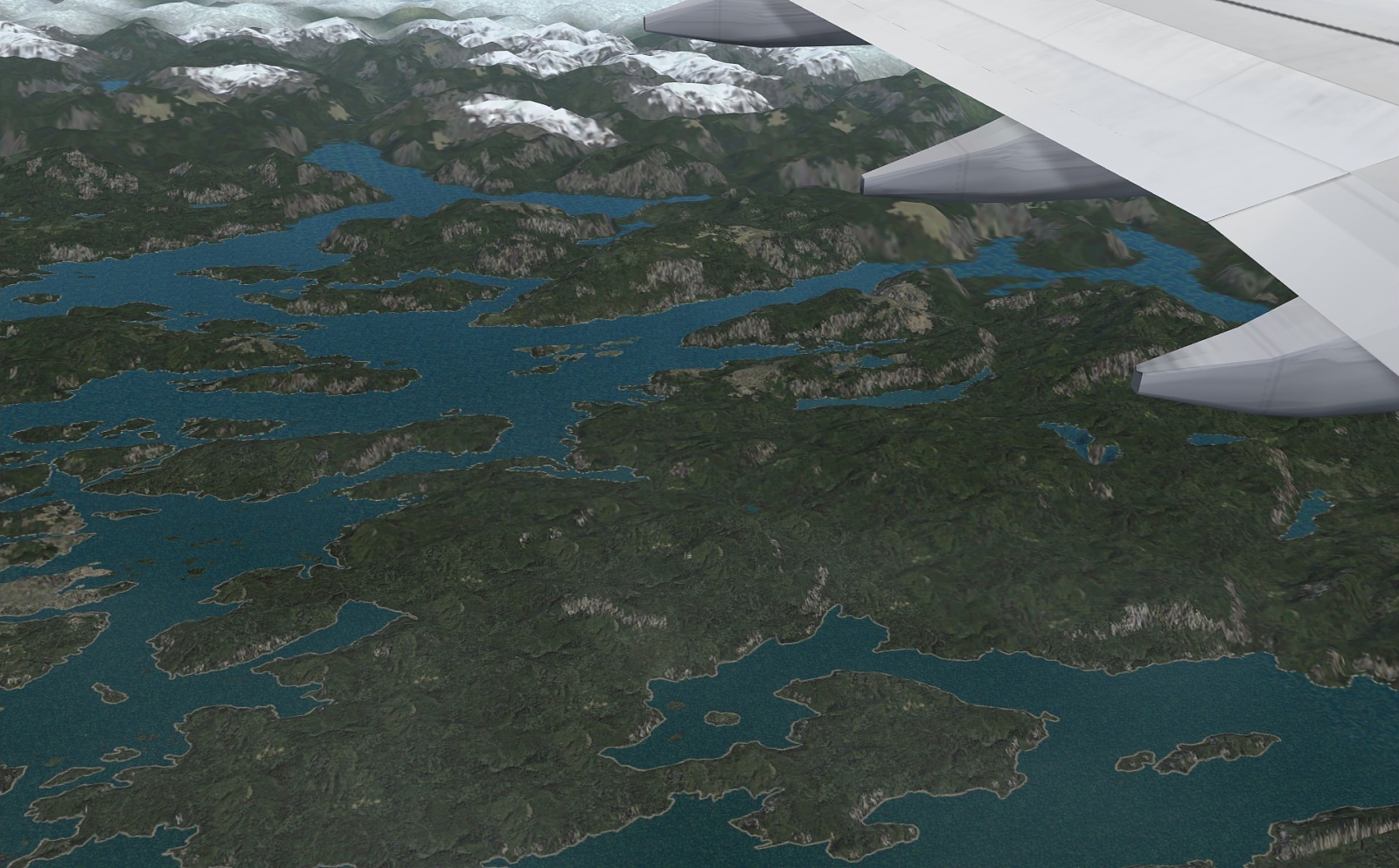
we turned right to JOH and climbed FL330. This flight was really
spectacular - on the left side of our route we saw the Chugach
Mountains including Mount Marcus Baker (4039m) and Saint Elias
Mountains including Mount Saint Elias (5492m - the second highest
mountain in US/Canada area) and Mount Logan (5951m - second highest
peak in North America after Mount McKinley). During our descend we
passed the famous Glacier Bay National Park and Mount Fairweather
(4663m). We flew direct Sisters Island SSR VOR and then performed a
RNAV approach as published (with a visual final, goaround and a
visual right hand traffic pattern). We landed safely and went to the
docking gate. American landed right after me, next was EUE 737 and
XUN as the last plane. We all really loved the surrounding scenery.
I am sure I will fly here again some time in the future.
Approach to PAJN Juneau (Glacier Bay)
Some apron photos (left one made by a ground staff
guy) and one from the nearby mountain (made by me while walking
around).
After a
two day break in Juneau we performed our aircraft maintenance and
prepared for the rest of our route. It was a nice weather when we
departured. This time NASA pilot joined us again. He departured as
the last plane, after XUN and EUE 737. I flew a simple SID towards
the SSR VOR and next proceeded as filed. Two hours later I
programmed a KEINN SEVEN arrival route and ILS approach to runway
26R. After passing Port Hardy on Victoria Island we turned left
towards POWOL fix which was the beginning of the STAR procedure.
Mountains on the left side were so beautiful that I forgot to take
pictures - I turned on my camera while on downwind to runway 26R. We
passed the downtown with its famous harbour and made a right turn to
intercept the ILS. After landing we parked at the stand 75 and
waited for the rest of the guys to make a picture. After our
aircrafts were shutdown we decided to go to Whistler for some
skiing.
Next day
we met again at the airport and started our briefing. The flight to
Aspen went just in a standard way. The weather was very good and we
had a nice local ATC. I did not make any photos as another arrival
to Aspen was planned couple days later after a trip to Grand Canyon
National Park airport.
Due to WHO reccomendations, every pilot
was obliged to receive a H1N1 swine flu vaccine prior to departure
from Aspen. A phisician consultant has been arranged to take care of
all WF2009EA pilots flying to Mexico. We took-off from Aspen
in a large group - local ATC was quite busy (Aspen is a small
airport though). We got a LINDZ FIVE starnard departure procedure
and than direct Red Table. I made few mistaked during this SID but
finally managed to get back the filed route. We had a large tailwind
during this flight - up to 100kts. Soon I realised that I made
another stupid mistake while refueling my aircraft. This mistake
caused not loading of 45min flight reserve fuel. I slew down
immediately to 0.75Ma that was more economical than flying a normal
0.78Ma speed. I checked my ACARS data for METAR information and
received "no wind" conditions with some broken clouds in MMMX. I
have prepared for the nearest approach to rwy 23L. When approaching
the airport a tower controller contacted me and assigned another
runway for landing - 05R. I had some extra fuel for couple minutes
of flight so I agreed for that (I didn't want to make a panic with
an emergency). I got a vector and changed my heading to west. After
couple miles my aircraft entered into a cloud layer so I couldn't
proceed visual. I was trying to contact the controller after passing
SMO VOR but somehow he couldn't hear me at all. Anyway I didn't
expect anything dangerous there as nothing was said on charts I had
with me. I was still flying high speed asked by an ATC (290KIAS) on
an altitude selected for ILS approach rwy 23L (10200ft) and west
heading when suddenly I saw a huge mountain just in front of my
windshield. Trees were coming closer so fast that I could only
switch off the AP and pull up manually. The GPWS was screeming
loundly. We managed to pass the mountain about 300feet AGL that was
actually a hair-width altitude taking into consideration the speed
and visibility. I quickly checked my charts for any other possible
terrain obstracles but couldn't find any information. I stopped
climbing at 13500ft and finally managed to get a responce from a
controller. He gave me a back vector (again over those mountains)
and a clearance for ILS approach runway 05R. I flew the whole
procedure but couldn't read any glideslope indication (only LOC was
active and alive). Luckly there was a break in the cloud layer so I
continued half visual to the runway. That was the last problem we
had that day. After a succesful landing we performed a taxi to a
stand and a shutdown. All other guys arrived after me without any
problems.
Part Two
(Mexico, Honduras, St. Maarten, Bermuda, Venezuela, Barbados,
Brasil, Argentina, Chile, Peru, Ecuador, French Polynesia)
Although we got all together at the airport, I
had to depart about an hour later due to some problems with my
radio. As soon as it was repaired, we took-off and proceeded as
filed. After departure, on the right side of our plane, we saw a
beautiful and famous Popocatepetl volcano (over 5000m high). I
didn't make a photo because it quickly dissapeared under some
cumulus clouds. As we were approaching Tegucigalpa the weather got
worse. During our descent rain started to fall and there were even
some CBs in sight. During that flight I was landing as one of the
last planes. I performed a full RNAV approach to runway 20 and
touched down safely. It was still raining when we got out of the
plane. The Continental aircraft landing after me, had some serious
problems with its gear and it seemed like some parts of its
undercarriage were damaged during the landing (on photos). We didn't
stay to watch but when we arrived next day there was no sign of any
crash. I guess he will need to stay in MHTG to make some repairs but
nothing really bad happened. All in all - be careful when performing
an RNAV to rwy 20. It goes very near to a mountain on the right side
and if something wrong happens to your AP you need to make instant
corrertions or even continue manually (that is what I actually had
to do).
After landing in Tegucigalpa
Last WF2009EA participant landing in MHTG (photos by
a local spotter)
Stage 12-1/0 (MHTG Tegucigalpa -
TNCM St. Maarten)
The rain
moved to another area of Honduras so the weather was nice with a
small wind. I have selected runway 20 for departure due to wind
heading but some guys preferred 02 (Aztec is taking of rwy 02 on the
first photo below). Everything was fine until my roll and take-off.
First of all I forgot that the airport elevation is quite high,
then, that runway is really short. I put flaps 5 for departure but
when passing 80 knots I realised that we will have large problems
with being airborned before the runway end... I was even thinking
about a rejected take-off procedure but there was no chance to break
down on the runway. I decided to put throttles to maximum value and
continue. I managed to take-off just on the very end of the runway,
2-3 meters above the airport fence, with a speed close to stall. I
instantly maintained the proper speed and started to bank right to
avoid a terrain. As soon as our speed increased to 170 KIAS I knew
we were safe. Of course I should have put flaps 10 or 15 for
departure - this is going to be a good lesson for future flights!
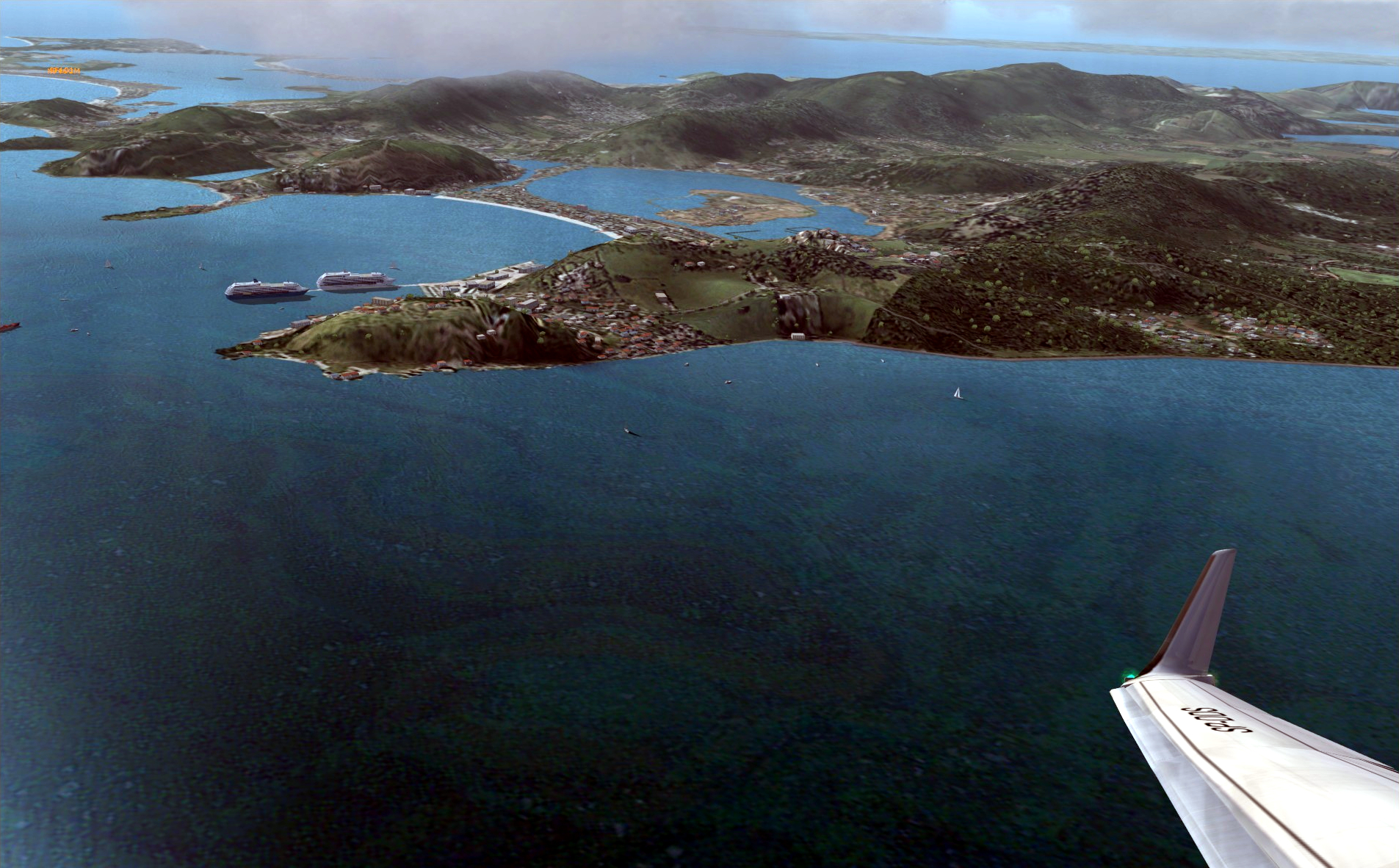
The Saint Maarten landing was just a standard RNAV approach, here is
a video:
TNCM St. Maarten landing
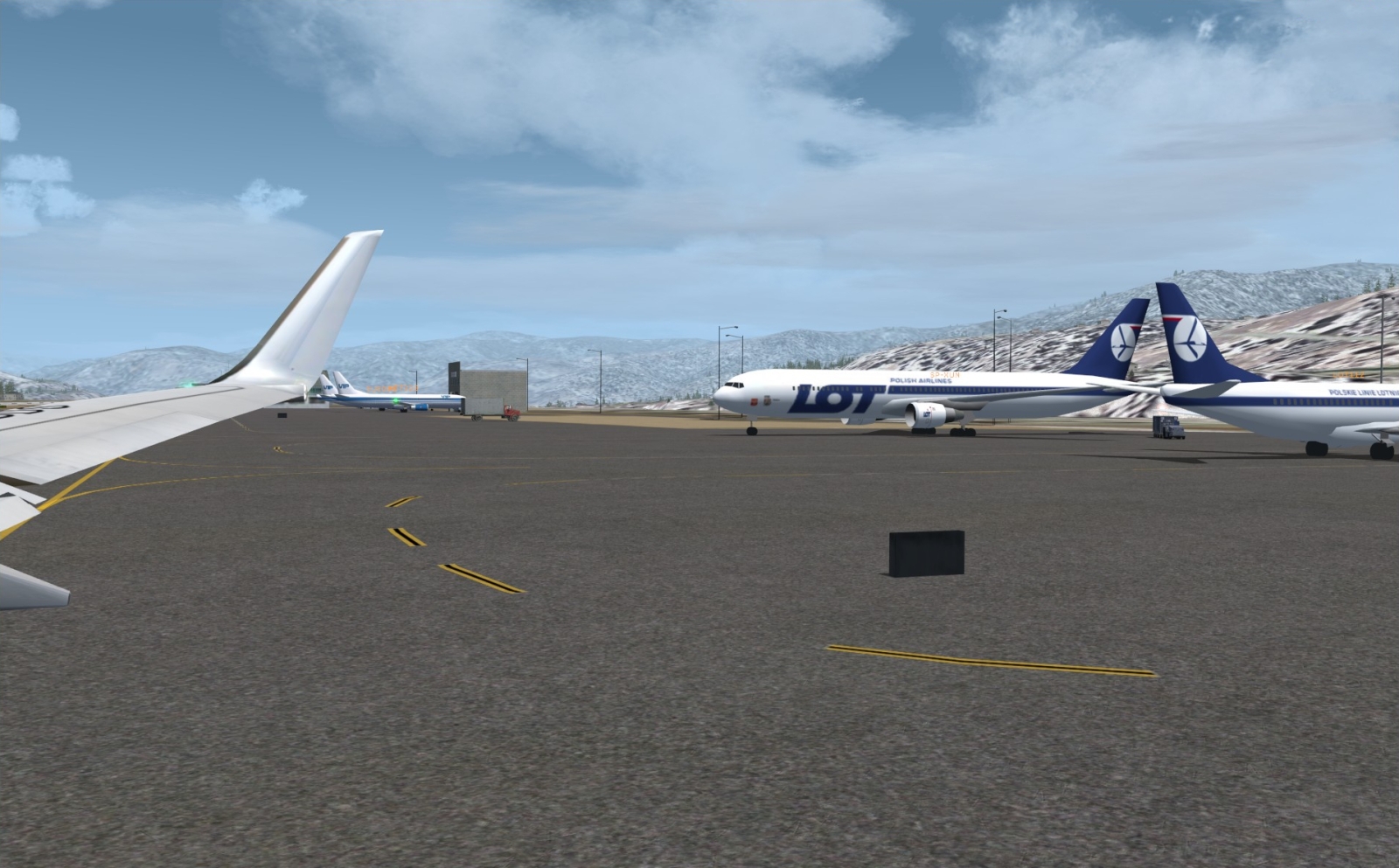
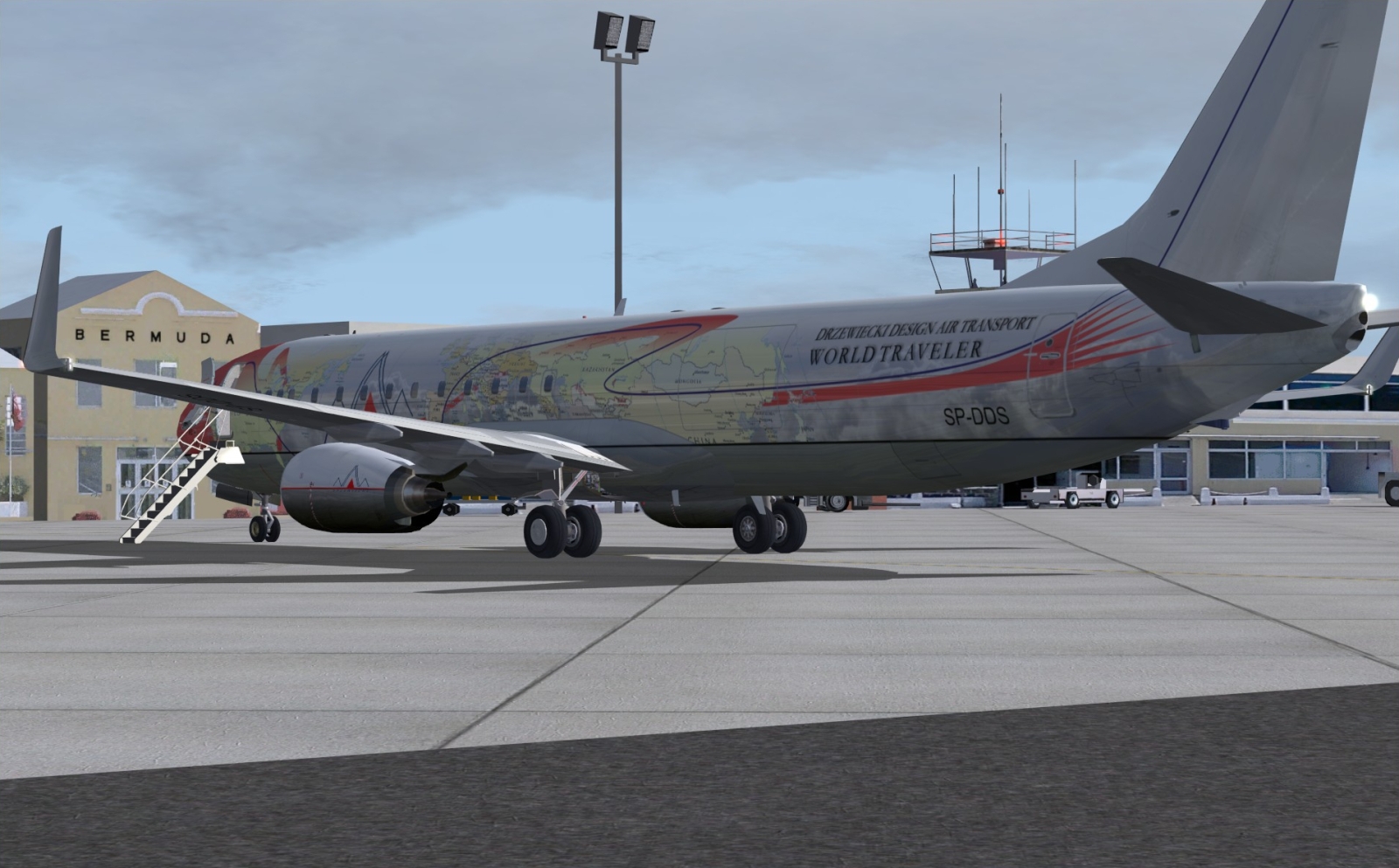
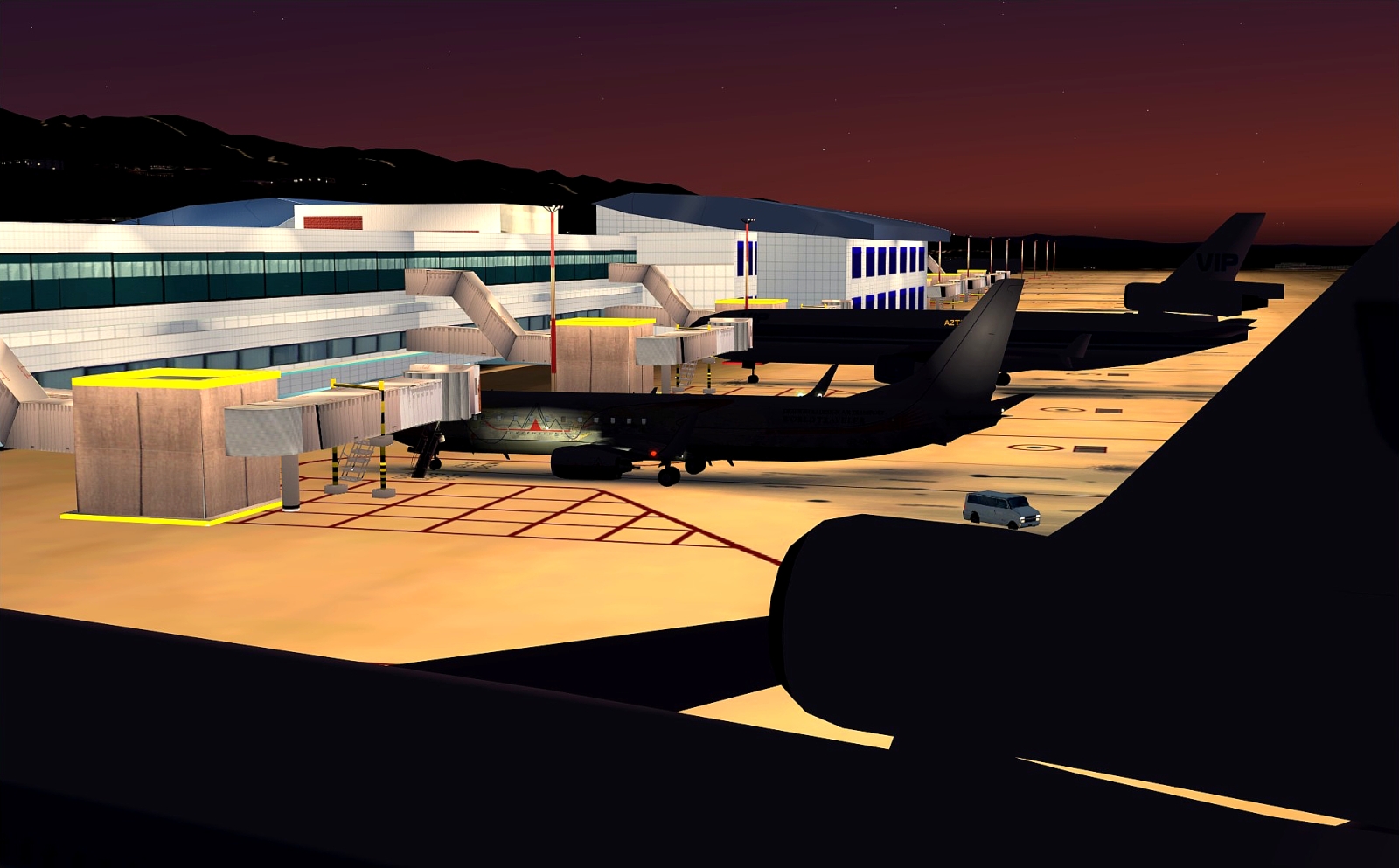
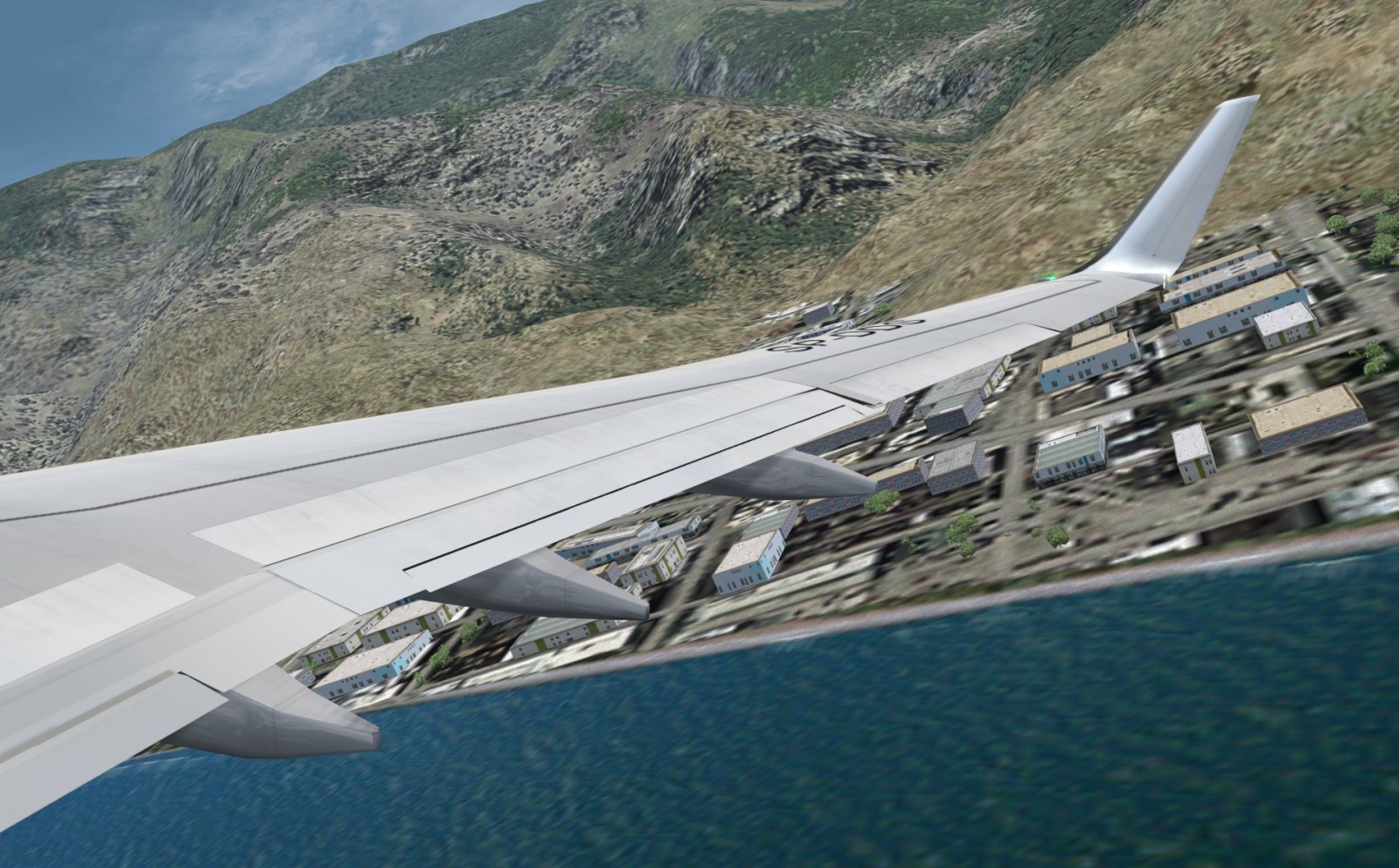
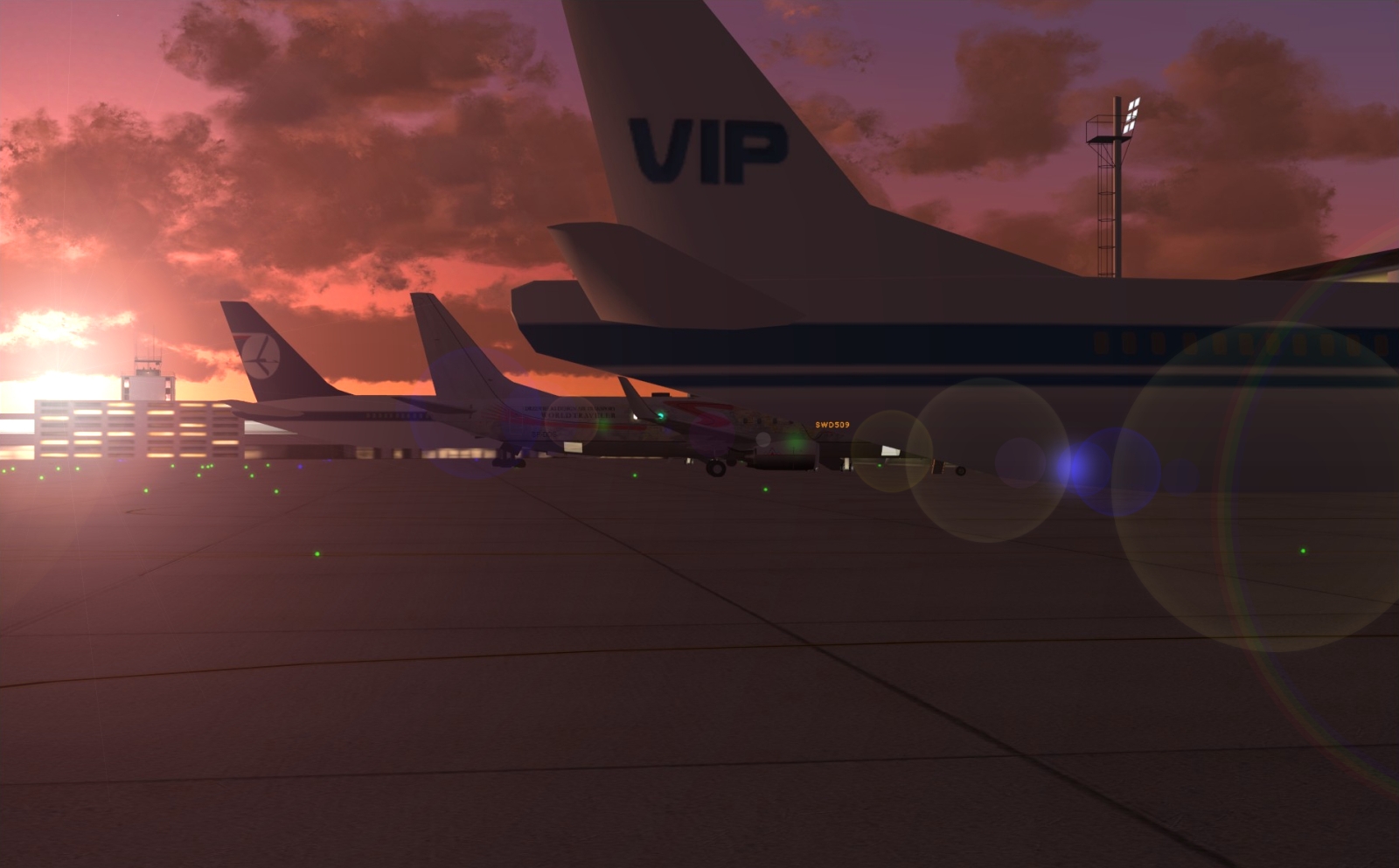
Departure from Tegucigalpa and on the apron in St.
Maarten
This time
I got early to the airport. During my stay in St.Maarten I had to
prepare some charts, replan some future routes and prepair some
documentation so there was no time to go to a beach at all. Luckly
we are coming back here after Barbados so after landing I will be
lying on the "runway beach" a whole day long! We departured from
TNCM under a control of the great, friendly ATC service. I hade some
issues with my radio again (couldn't switch to APP frequency) but
San Juan Center helped me by handing me off. Right after me a KLM
aircraft departured as a WF2009EA participant for this leg. The rest
of the guys decided to stay here in St. Marteen or to depart later
(I know what they were doing but I will not write it here). We
climbed FL320 and flew on this altitude until reaching the T/D
point. Below there is a video of a little bit non standard visual
approach to runway 12. After me the KLM aircraft landed the same
runway and he is on my video too. After landing we decided not to
wait for the rest of the group and went for some yachting around the
island.
After
spending a great day in Bermuda city I departed for Caracas,
Venezuela. During the flight it got dark so it was really easy to
fell asleep... what I obviously did. I woke up about 30 miles after
passing T/D so I entered a published holding and then continued the
standard ILS approach. The airports was beautifully located right
next to the mountains which looked gorgeous during the sunset.
We came at the airport in the afternoon
and it was really crowded. There were many planes departing South
America, North America and even Europe. We made a standard briefing
and took-off. The weather was still nice however some major
turbulences occured. But that wasn't strange at all - our departure
route was planned very near to the mountains on our right side. We
climbed our cruise level 330 but only for a short while as this
flight was really short. After half an hour we reached our T/D point
and started to descent to Barbados airport. We received vectors to
ILS approach and landed safely with almost 20 knots headwind. Here
is a video from our landing:
Landing in Barbados
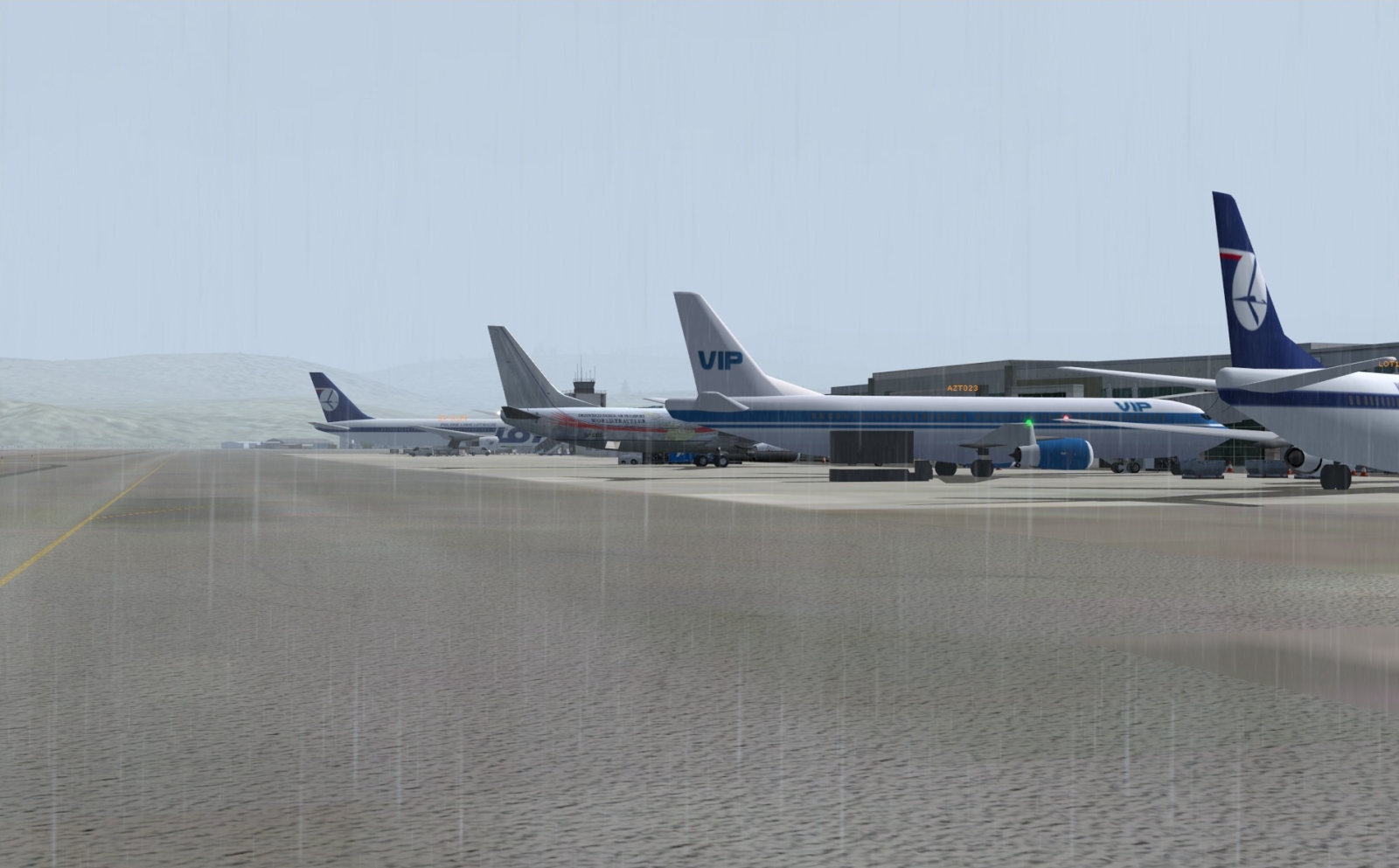
Photos from departure from SVMI Caracas and on apron
in Barbados.
After a great time in Barbados we went
back to Saint Maarten island and this was actually a flight from one
paradise to another paradise... The weather was beautiful and the
scenery - fabulous. We got cleared for a visual approach to runway
10 however when we were turning to final a controller got a radio
failure. It lasted for a few minutes so we made a missed approach
and entered a holding. After the radio contact was recovered we
asked for a visual with a short final and we received a clearance. I
made a traffic pattern and turned for a 2nm final to runway 10.
After a safe landing we did a backtrack and went to stand Alpha 3. A
while later the Poland Cargo's MD11 arrived and parked next to us.
He was going back home after this flight so I gave him some
souvenirs for my friends in Poland.
Guess
what! By the time I got to the St. Maarten's beach it started to
rain! The air temperature was still 27 degrees Celsius so I decided
to test the ocean water and swim for a while. XUN guy joined me so
we both looked like some crazy dudes. It was still raining when we
came to the airport. I did a quick briefing, asked for a clearance,
performed a taxi and took-off from runway 10. XUN wasn't so lucky
and he got a 30min delay due to heavy traffic. All in all we arrived
at Sao Paulo together as his aircraft was faster than mine. The ATC
staff didn't care about us too much so we were trying to maintain a
safe separation from other flying aircrafts ourselves. After landing
we realised that they were expecting us to contact them while we
were expecting them to contact us. I did a STAR procedure CELSO for
ILS approach to runway 17R. Everything was good until establishing
on the ILS. Somehow I managed to maintain to high speed on the
glideslope and after performing a really huge flare I touched down
quite far from the touchdown zone. Autobrakes didn't turn on so I
really had to break hard to slow down in time (the runway was only
1940 meters long). I vacated via Juliett and parked at gate 12 of
the main terminal. Few minutes later XUN arrived on his 767, right
before two local "TAM" guys. Here are some photos:
This time
we flew in a group of 6 aircrafts: SP-DDS (B739), SP-XUN (B763),
AZT023 (MD82), LOT112 (B737), EUE005 (B738) and DAL297 (B767). This
flight was full of some strange issues with our aircrafts. Some guys
had problems with avionics, other with gear or engines. I had a
strange behavior of my gear system - during a flight suddenly 3 red
lights turned on. Luckly it was just some kind of a small electrical
failure - the whole gear hydraulic system was working properly.
LOT112 was not so lucky - he got an engine failure and after one
go-around in SABE Buenos Aires he decided to make an emergency
landing on an alternate airport - SAEZ Ezeiza. Delta's 767 made
go-around too and Aztec was put to a half an hour holding. Finally
we all landed safely and went to a reserved hotel. LOT112 arrived
there on a taxi an hour later.
We all
had to be early at the airport to check all systems that were not
functioning properly the previous day. LOT112 went to SAEZ airport
to talk to some tech guys. My electrical failure was very simple to
repair so after a while my 739 was ready for a flight. After two
hours I got a call that LOT112 will fly with us too. For this flight
also UPS, Lan Chile, SUR Air System, South Virtual and Argentina
Airline pilots joined us. The weather in Buenos Aires was nice with
a few clouds. I took-off runway 13 and proceeded EZE VOR as
requested, climbing to FL340. During the whole flight we had a
75-knots headwind and some minor turbulences. In Chile aerospace the
weather got much worse - it was cloudy and foggy. I performed a
standard arrival procedure UMKAL8 for ILS approach runway 17L,
passing beautiful mountains below us. The ATC perfectly separated
all landing aircafts and we arrived safely at SCEL airport with no
problems this time. I made a video from our departure and landing.
It was a
windy day when we took-off from Santiago. XUN departed earlier and
reported a 140kts headwind. After take-off I got a 70kts headwind
but luckly over the ocean it changed to a 50kts crosswind. LOT, EUE
and UPS were flying after me. After departure we contacted Santiago
Center with a procedural control of the aerospace. Then we were
handed off to the Lima Center, also procedural. The weather seemed
to be nice but when descending we entered some kind of a fog so I
decided to proceed a VOR DME approach as published instead of making
visual. I approached the runway with a 10kts headwind, got a landing
clearance, landed and vacated via Bravo. There were few military
aircrafts already waiting for our arrival, but instead of being
arrested we were invited to a "hangar party"!
Another
day with a nice, windy weather. For this flight a KLM 737 joined us.
LOT was flying with me to SEGS, UPS decided to go to SEST (there was
no more parking place in SEGS airport) and EUE flew to Quito SEQU
with his 767 aircraft. We planned our departure order on our private
frequency and took-off. There was a constant 50kts headwind during
the whole route. After an hour of flight we changed our flight level
from 340 to 360. This time our plane was completely full of
passengers (the same 40) and cargo (we got a special request to
transport some military equipment to Baltra). When we reached the
Ecuador aerospace we contacted Guayaquil Center and got a direct
route to Baltra. I performed the ILS ARC DME approach to runway 14
as published and landed in SEGS with a few knots tailwind. After
backtrack I parked next to the control tower and turned around for
easier cargo unloading and taxiing the next day. The Baltra Island
(called also the Seymour Island) is very arid and vegetation
consists of salt bushes, prickly pear cactus and palo santo trees.
During World War II Baltra was established as a US Air Force Base.
Crews stationed at Baltra patrolled the eastern Pacific for enemy
submarines and provided protection for the Panama Canal. After the
war the facilities were given to the government of Ecuador. Until
1986, Seymour Airport was the only airport serving the Gal?agos. On
arriving into Baltra, all visitors are immediately transported by
bus to one of two docks. The first dock is located in a small bay
where the boats cruising the Gal?agos await passengers. The second
is a ferry dock which connects Baltra to the island of Santa Cruz
via the Itabaca Channel. We all went to Santa Cruz Island. "Gal?ago"
is an old Spanish word, meaning saddle. The large Gal?agos tortoise
on some of the islands had a shell that resembled an old Spanish
saddle, thus the name. The tortoise is a unique animal found only in
the Galapagos Islands, yet there are no more than 200 in the 13 main
islands. The oldest island is thought to have formed between 5 and
10 million years ago. The youngest islands, Isabela and Fernandina,
are still being formed, with the most recent volcanic eruption in
April 2009 where lava from the volcanic island Fernandina started
flowing both towards the island's shoreline and into the center
caldera. Such erruptions are extremely dangerous in aviation as
volcanic ash jams machinery. This poses a great danger to aircraft
flying near ash clouds. There are many instances of damage to jet
aircraft as a result of an ash encounter. Engines quit as fuel and
water systems become fouled, requiring repair. After the Galunggung,
Indonesia volcanic event in 1982, a British Airways Boeing 747 flew
through an ash cloud that fouled all 4 engines, stopping them. The
plane descended from 36,000 feet (11,000 m) to 12,000 feet (3,700 m)
before the crew could manage to restart the engines. Luckly this
time we had no problems of this sort during our arrival, however all
"volcanic ash" emergency procedures were prepared and ready to
apply.
After
this flight I can say only one thing - when I described Barbados and
St. Maarten as a paradise I did not know what that word really
mean... We took-off from SEGS Seymour Baltra airport under the great
atc control of Guayaquil Center as planned. Our plane was full of
fuel and with flaps 10 we used about 2km of runway when rolling. We
were lucky about the wind - this was a long haul and 50kts constant
headwind would cause big problems to us. We got only 11kts crosswind
during the whole flight so when arriving to Hiva Oa we still had 4t
of fuel left. It was a fabulou view when we were approaching the
island. It slowly appeared from the clouds like some sort of a
forgotten land... with all those sharp rocks and cliffs. Hiva Oa has
two NDBs but there are no approach procedures published for this
airport. I didn't know if I missed some charts or really no official
procedures were made. When I saw the airport and a surrounding
terrain I realised, that actually there is no way to land there
without having the field in sight... There are mountains and canyons
everywhere so the best thing is to forget about all instruments
(except for speed indicator) and make all operations visually. When
arriving at the airport it seemed like the field is places much
higher that charts say.. That is not true. The airport elevation is
exactly as published. I made a one traffic pattern to look at the
runway condition and another circle to establish on final. The
runway was only 1215m long so I put flaps 40 and autobrakes MAX.
This was actually a perfect setting giving me some extra 200-300m
for a potential error. We did no errors this time and land just as
planned so we were able to make a right turn to a taxiway and park
on the stand. Maybe the landing was a bit to bumpy but there were
some tricky crosswind gusts and I didn't want to risk at all by make
a large flare. After me NASA pilot arrived and then EUE and LOT112.
LOT had to make one go-around and I included a recording of it on
the movie below - made by a local spotter. The second time he landed
perfectly and we all were invited for some sightseeing.
Hiva Oa
is the second largest island in the Marquesas Islands, in French
Polynesia, an overseas territory of France in the Pacific Ocean. It
is the largest island of the Southern Marquesas group. Its name
means ?long ridgepole? in South Marquesan. The island is likely so
named because of its long central ridge. Hiva Oa. View from beside
the road between Atuona and Puamau.Administratively, Hiva Oa is part
of the commune (municipality) of Hiva-Oa, itself in the
administrative subdivision of the Marquesas Islands. Atuona, on the
south side of Hiva Oa island, is the administrative centre of the
commune. Atuona was formerly the seat of government for all of the
Marquesas Islands, but it has been replaced by Taiohae on Nuku Hiva
island. The island was the final home of French painter Paul Gauguin
and Belgian singer Jacques Brel.
Landing in NTMN Hiva Oa
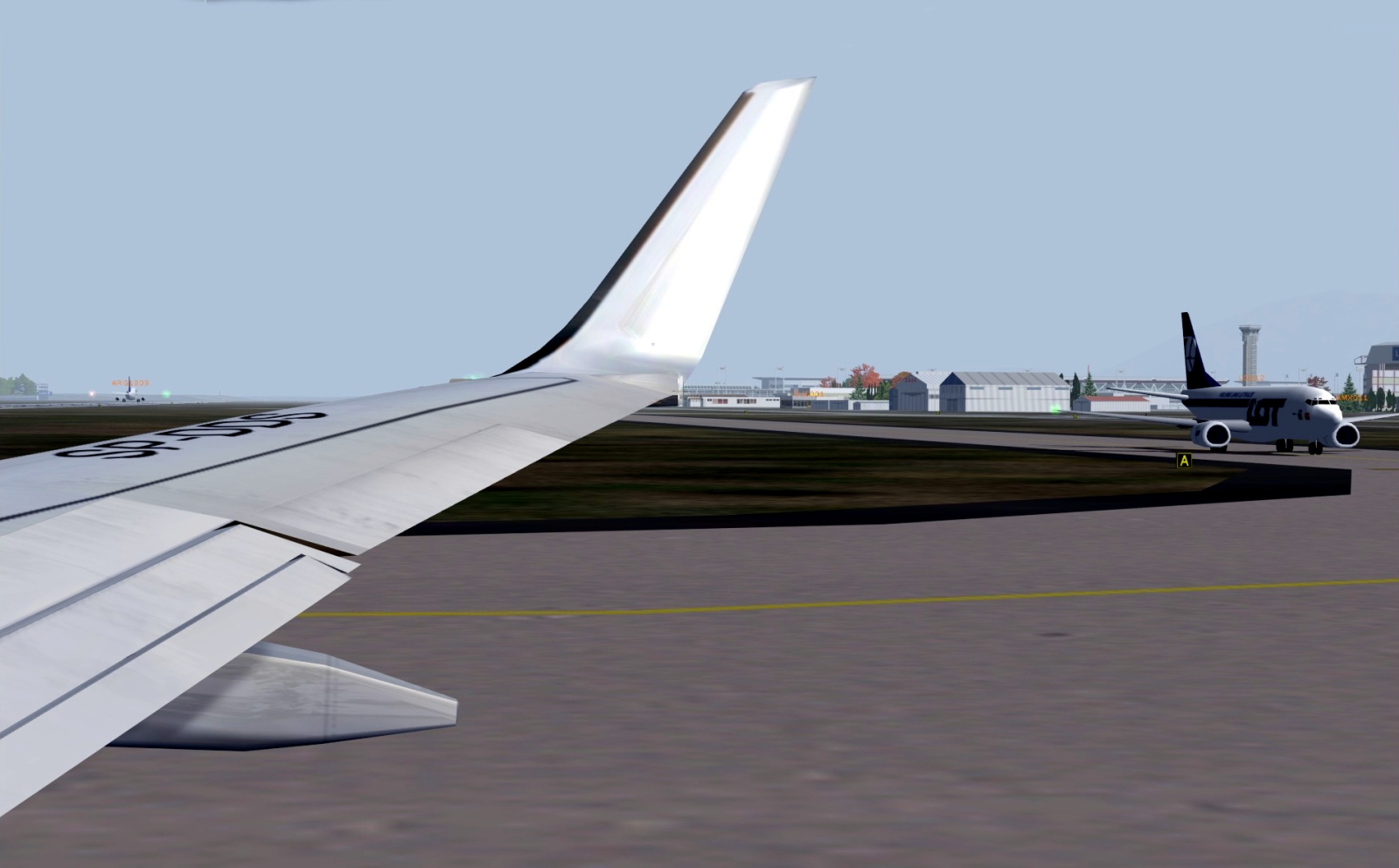
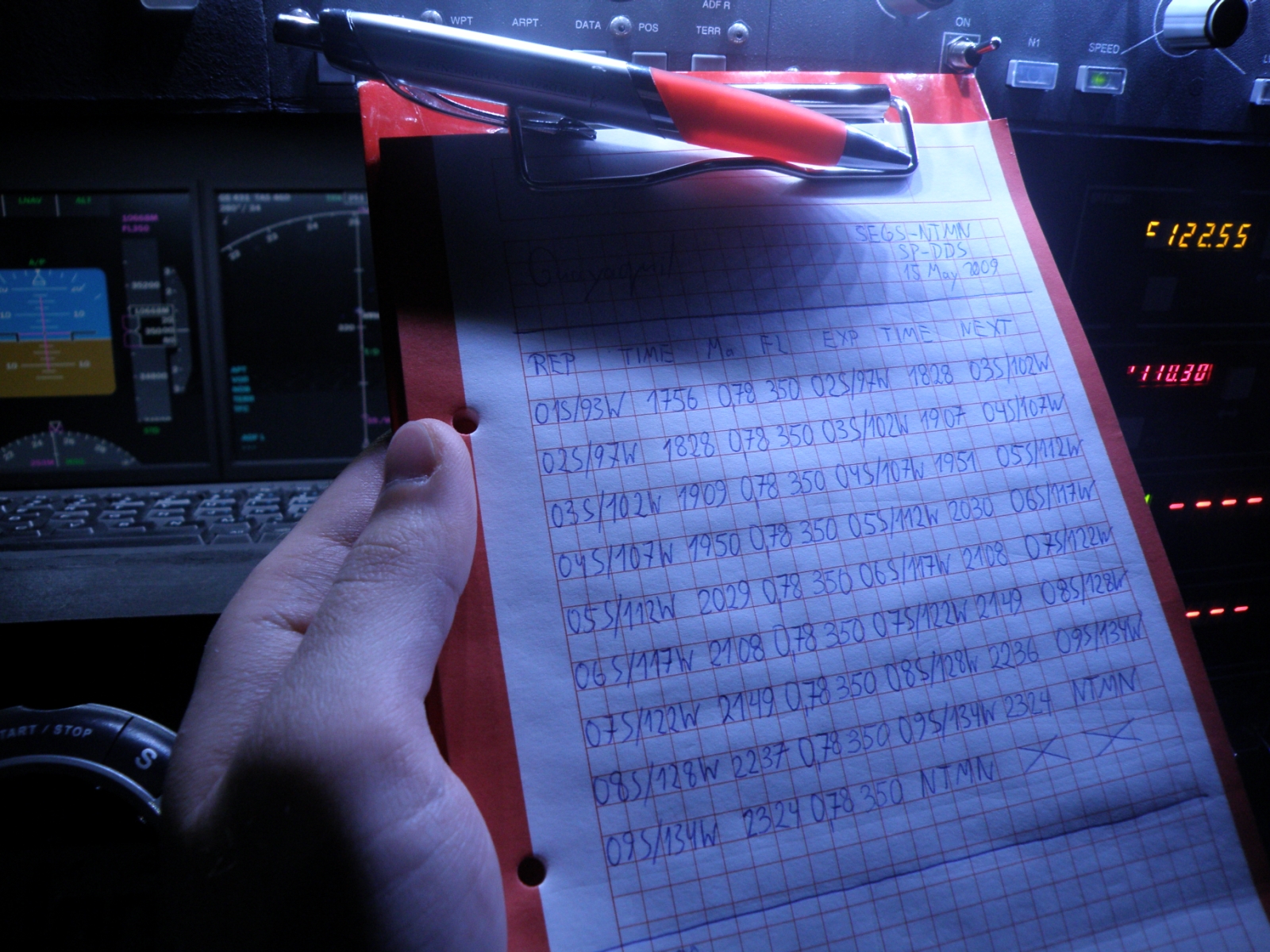
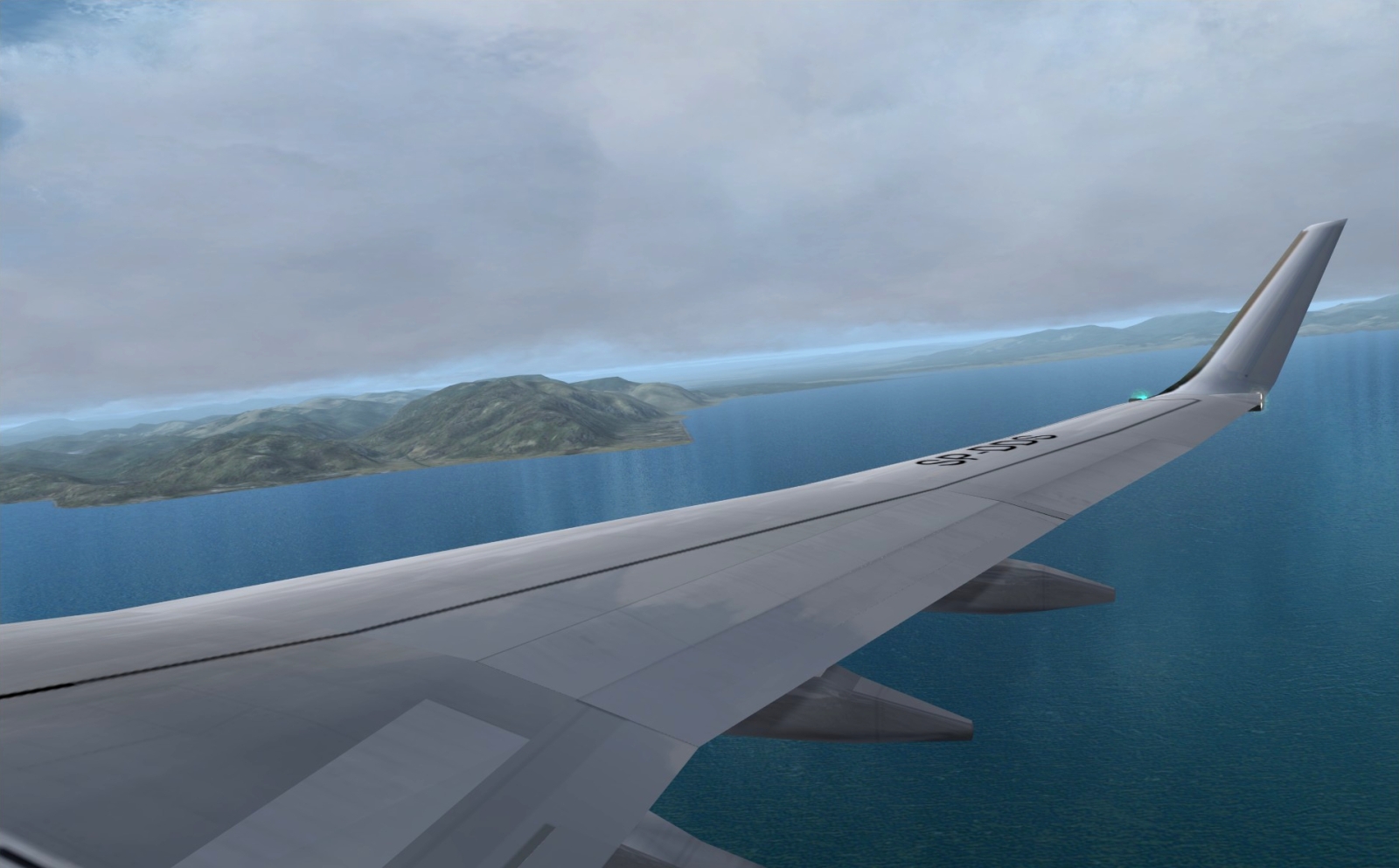
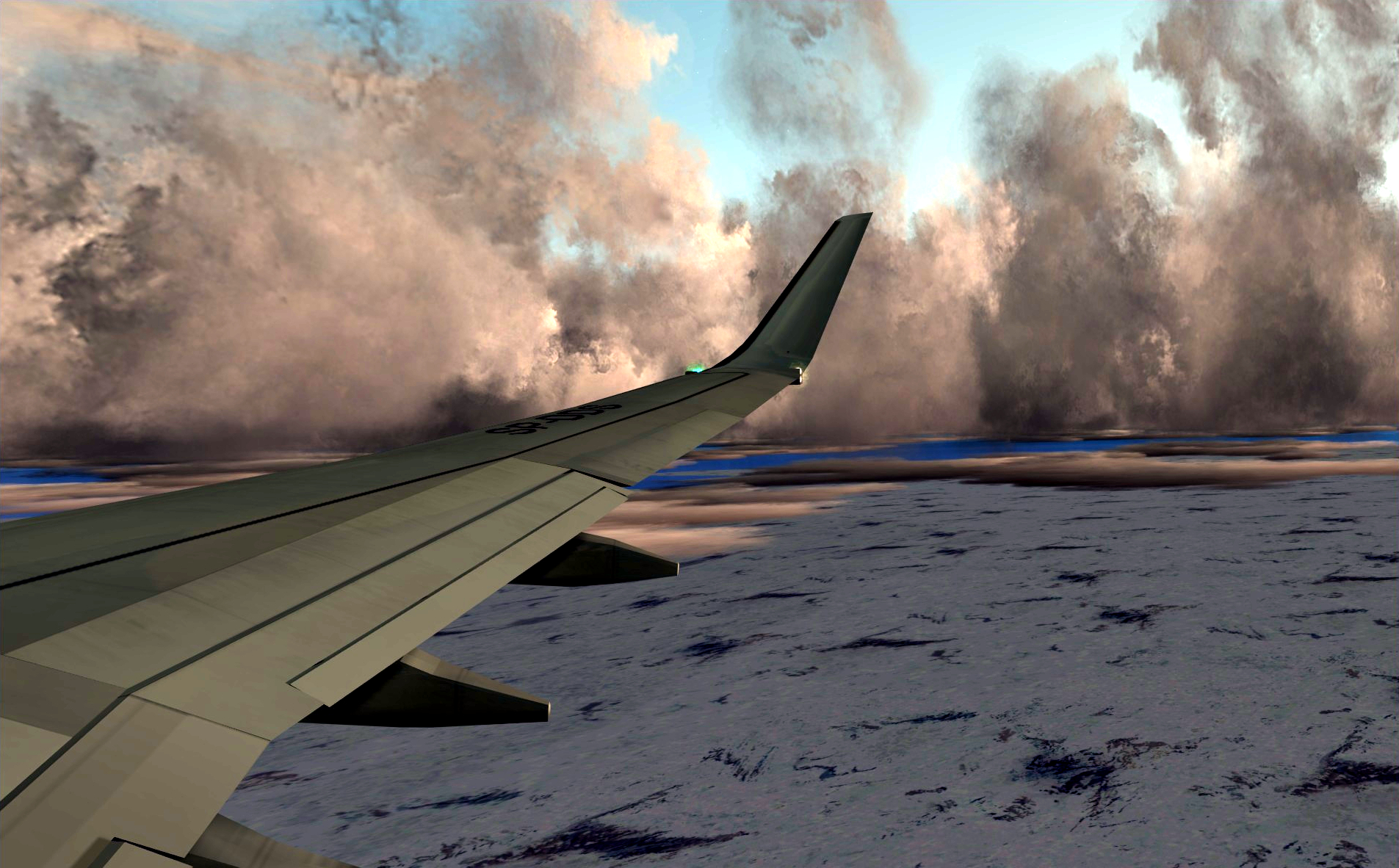
On the apron in SEGS, approach to NTMN, on the apron
in NTMN and position reports from the route.
Part Three
(French Polynesia, New Zealand, Antarctica, Australia)
Our
flight to Hiva Oa finished the Part 2 of our route. Some guys
decided to change next flights to different airports, some to join
us back in Antarctica. Anyway we had to proceed next 3 flights
alone. It was a difficult thing to properly calculate all take-off
speeds in Hiva Oa. We had to take 100% of fuel to be able to reach
New Zealand. I used flaps 25, pitch trim 1.5 and about 96% of thrust
for departure. The calculation was good and we safely took-off
heading west. Right after departure the situation became more clear
regarding winds - it was 40kts headwind. After half an hour it
changed to 70kts headwind. After 8 hours of flight with the same
wind I was already sure that we will not going to make it to
Queenstown and I decided to proceed to an alternate airport -
Wellington Intl. We made a standard ILS approach but actually it was
not so standard - the wind in the airport was 23 knots, gusts 43
knots, variable from heading 290 to 010... I have never seen such
turbulences before - even when making special flights during a
huricane in the USA a year ago. It was difficult to maintain a
constant heading during the final approach. Anyway we managed to
land normally. Passengers were still sitting in the plane when we
got refueled. After half an hour we were able to proceed with our
route to Queenstown. There were still 400 nautical miles remaining.
We flew over the beautiful New Zealand mountains and made a standard
RNAV approach in NZQN. The weather was nice with almost no wind so
landing was not a problem. There were only some terrain abstracles
on the final approach but with properly working FMC and using the
RNAV procedure we could actually forget about this problem. We
landed safely and were picked up by the ground staff together with
our passengers.
Queenstown is a international resort
town in Otago in the south-west of
New Zealand's South Island. It is
built around an inlet on Lake
Wakatipu, a long thin lake formed by
glacial processes that is shaped
like a staggered lightning bolt, and
has spectacular views of nearby
mountains. Queenstown is a centre
for adventure tourism. Skiing, jet
boating, bungy jumping, mountain
biking, tramping and fly fishing are
all strong promotional themes. A
coal fired steamship that is nearly
100 years old, called the TSS
Earnslaw, provides tourist trips on
the lake. In recent years,
Queenstown's hostels have become a
popular destination for tourists
from all over the world. Queenstown
provides adventure tourism during
the day and a vibrant nightlife
scene during the evenings. Locally,
Queenstown has a reputation as one
of New Zealand's wine and cuisine
centres. Queenstown and the
surrounding area contains many
locations used in the filming of the
Lord of the Rings film trilogy.
Queenstown Airport serves the resort
town of Queenstown, handling more
than 700,000 airline scheduled
passengers a year, which is growing
rapidly.
After
spending a night in New Zealand we arrived at the Queenstown airport
again. Our trip to Antarctica was not an easy task for a few
reasons. One of the most important reasons for the total flight
time. We could stay in Wilkins base only for about an hour and a
half so it was more like a trip to Perth with one extra landing. The
total flight time of this Antarctica trip was about 11 hours. The
route to YWKS was a simple RNAV route but the landing was really
special. I made a movie from this landing so you can check yourself
how it looked like (the movie is below).
Wilkins
Runway is a single runway aerodrome operated by Australia, located
on Budd Coast, Wilkes Land on the continent of Antarctica, but 40 km
southeast of the actual coast. It is named after Sir Hubert Wilkins,
a pioneer of Antarctic aviation and exploration. Construction of a
runway in the Australian Antarctic Territory was first suggested in
the 1950s, but logistical, political and environmental issues meant
construction of the runway did not begin until 2004.[1] The AUD $46
million dollar runway is carved into glacial blue ice, approximately
65 km (40 miles) from the Australian base at Casey Station. In order
to be approved by Australia's Civil Aviation Safety Authority
(CASA), Wilkins was required to be levelled to runway standard with
the use of lasers, and requires a crew of eight to maintain the
level and friction of the runway before each landing. CASA issued an
aviation licence for the airline Skytraders to operate passenger
flights, and the first flight was made on January 11, 2008, carrying
Australia's Environment Minister Peter Garrett, twelve scientists
and six other passengers. Prior to the runway's completion, the trip
to Antarctica involved a ten-day journey by ship across the Southern
Ocean from Hobart.
To bad we
were able to stay in Wilking Aerodrome for only such a short time.
Antarctica's land looked really amaizing. Anyway we have packed
again with all our 40 passengers and prepared our aircraft for
take-off. We had a 8kts crosswind. On a normal runway such wind is
not a factor, however on ice it was extremely difficult to keep the
plane on the centerline. When the speed increased above 20kts there
was no steering capabilities of the front wheel. Only above 80kts,
when our rudder started to produce lift force, the plane slowly
turned right. You can see all these things on my video above (it
includes our take-off). The rest of our flight was normal however we
got an awful weather in Perth. It was cloudy, windy, foggy and
rainy! The turbulences were comparable to our landing in Wellington.
The autopilot had problems with establishing our plane on a
localizer. We were alligned on ILS only 3-4 miles to the runway. I
landed on runway 21 and vacated left. Then we proceeded to the
International Terminal. We arrived at the late evening and were
instantly taken to a hotel.
Perth is
the capital and largest city of the Australian state of Western
Australia. With a population of 1,650,000 (2009), Perth ranks fourth
amongst the nation's cities, with a growth rate consistently above
the national average. The metropolitan area is located in the south
west of the continent between the Indian Ocean and a low coastal
escarpment known as the Darling Range. The central business district
and suburbs of Perth are situated on the Swan River. Perth is ranked
4th on The Economist's 2008 list of the World's Most Livable Cities.
This time
we arrived at the airport very early. It was still dark and the
weather was rainy. After a standard take-off we performed a SID and
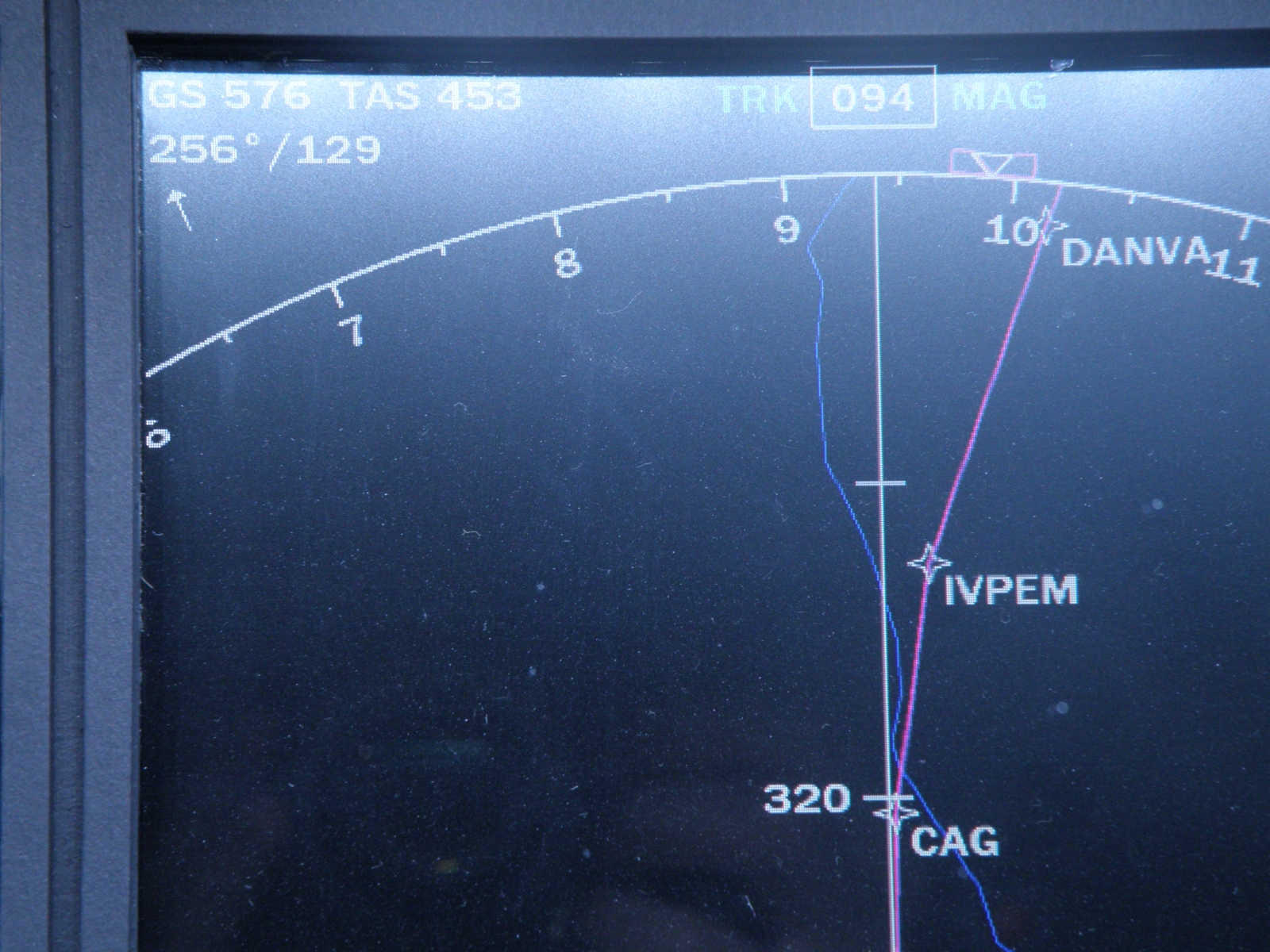
climbed FL390. On this flight level we got a 129 knots tailwind.
With such a large tailwind our speed indicator displayed 576 knots
ground speed (1066 km/h, 663mph) while our airspeed remained 0.78
Mach. We arrived at Sydney airport 40 minutus earlier than our
planned arrival time. The visibility was only 3000 so there were no
chances to see the city itself. Luckly the local organizer arranged
us and our passengers a small sightseeing tour. Sydney is the
largest city in Australia, with a metropolitan area population of
approximately 4.34 million (2008 estimate). It is the state capital
of New South Wales, and was the site of the first British colony in
Australia. It was established in 1788 at Sydney Cove by Arthur
Phillip, admiral of the First Fleet from Britain. In the year ending
March 2008, Sydney received 2.7 million international visitors. The
most well known attractions include the Sydney Opera House, and the
Sydney Harbour Bridge. Other attractions include Royal Botanical
Gardens, Luna Park, the beaches and Sydney Tower. Sydney Airport, in
the suburb of Mascot, is Sydney's main airport, and is one of the
oldest continually operated airports in the world.
The last leg of our event was divided into two destinations - EPWA
Warsaw Ok?ie and EPKK Krak? Balice. We flew to Krakow, the same
airport we departed from. Our take-off was planned for the sunset
time so we were able to see the beautiful Algerian landscape and
make some photos of it. We took-off from runway 05 and performed a
SID3 departure. For the rest 1200 nautical miles we were flying on a
flight level 410 with ca. 30kts tail-crosswind. The weather in
Krakow was quite turbulent but visilibily was good so I decided to
proceed visual to runway 25. Before reaching KRW VOR we made a left
turn and landed safely on our home runway. After unloading all
passengers and cargo our plane was put into a hangar for a
repainting to our standard DDAT livery. All documents, statistics
and failure reports were put to DDAT archive for future analysis.
After 155 hours of flight the event was finally completed!
Landing in EPKK Krak? Balice
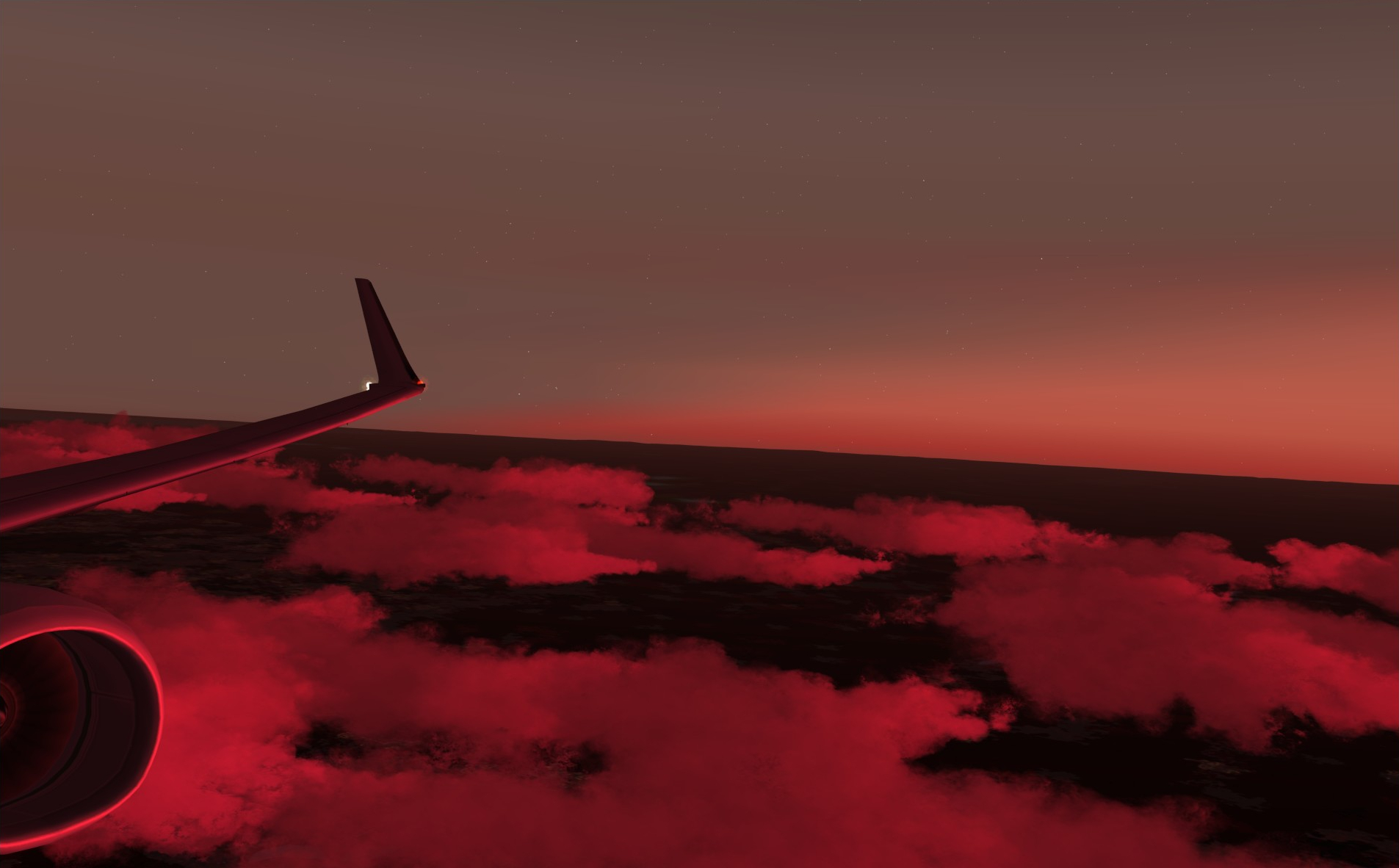
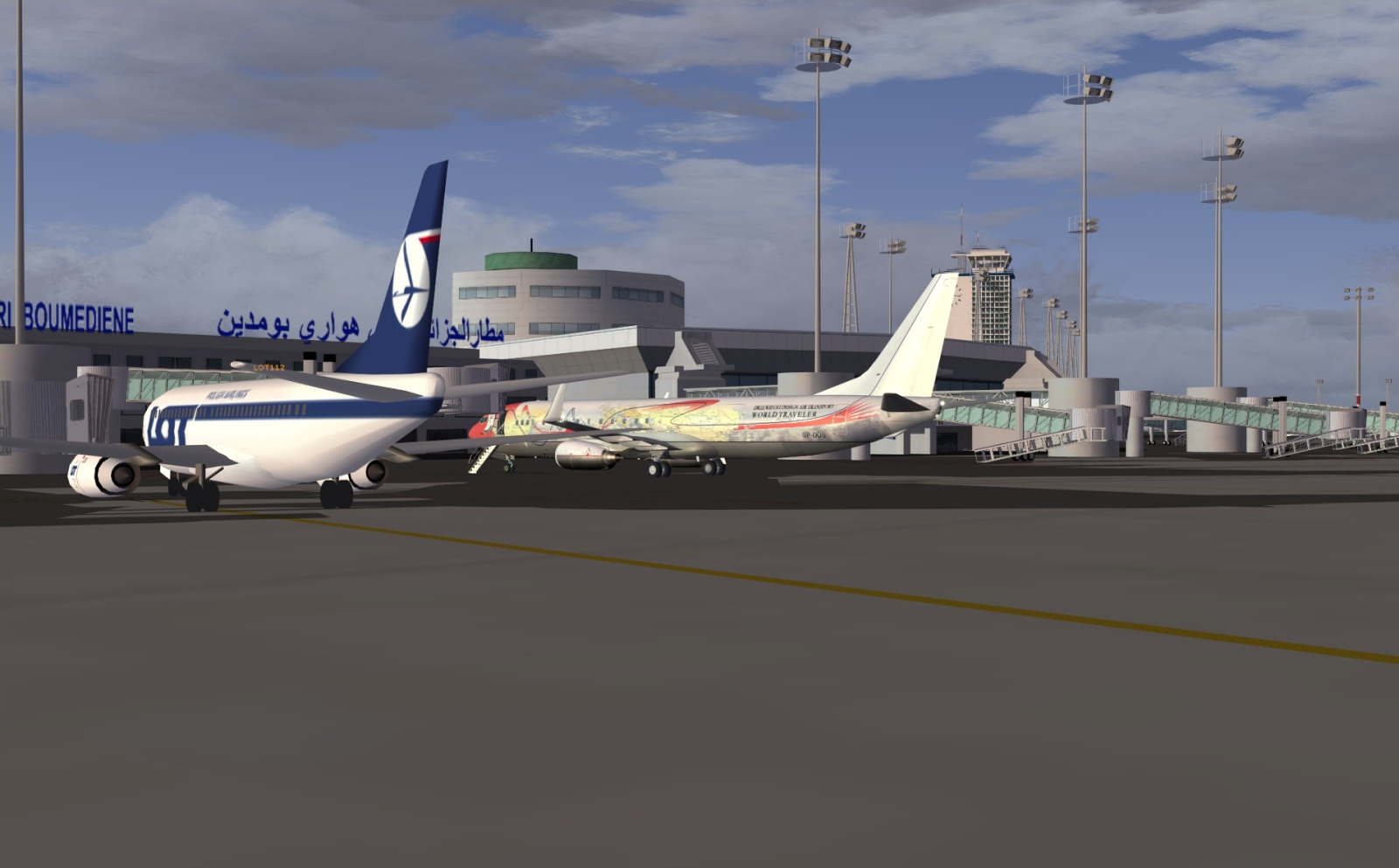
On the apron in DAAG
Departure from El-Jazair
Arrival at Krak? EPKK airport
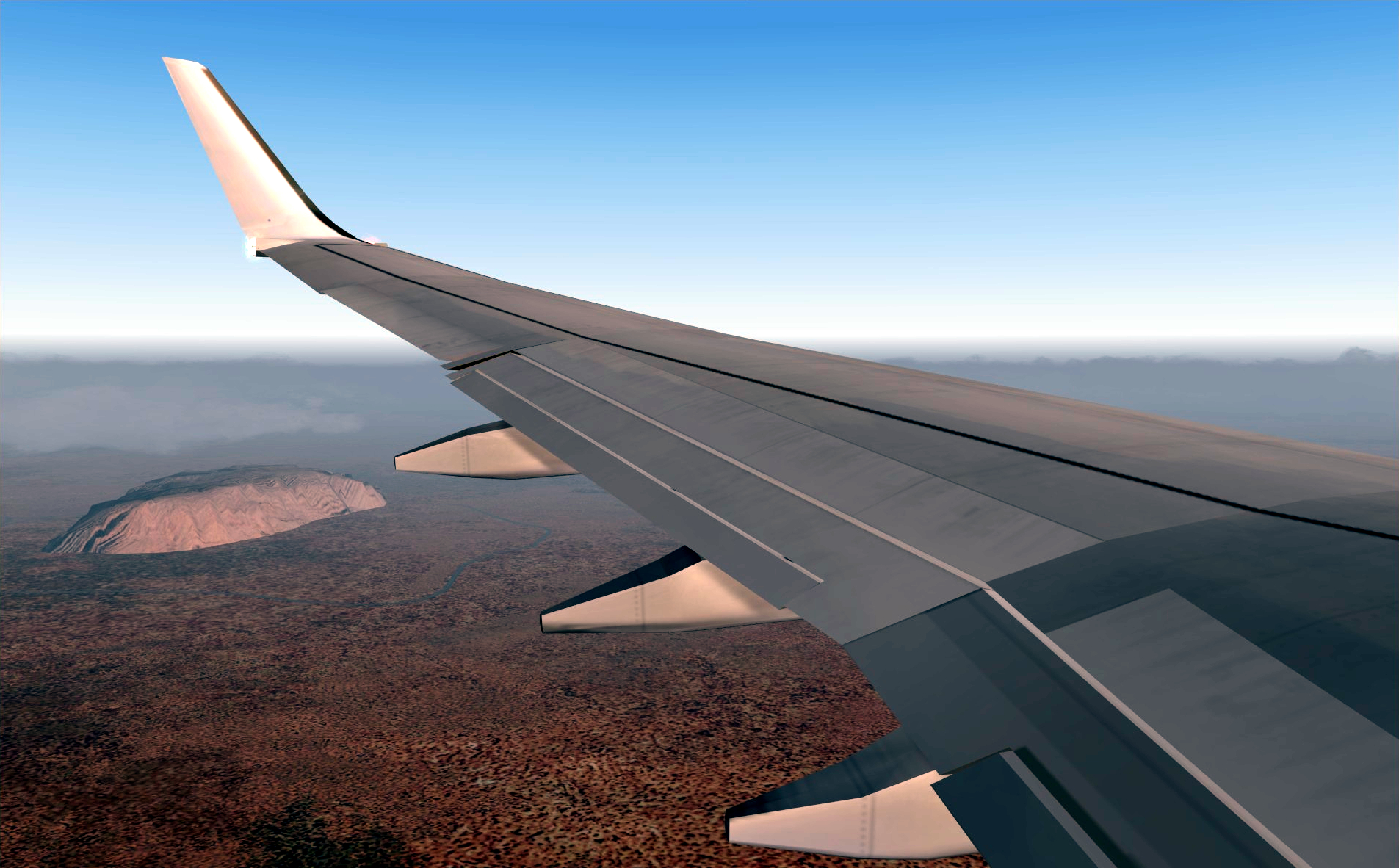
A few in-flight cockpit photos
Summary of the World Flight 2009 Extreme
Approaches - the movie


.jpg)
.JPG)
.jpg)
.jpg)
.jpg)
.jpg)
.jpg)
.jpg)
.JPG)
.JPG)
.jpg)
.jpg)
.JPG)
.jpg)
.jpg)
.jpg)
.jpg)
.JPG)
.jpg)
.jpg)
.jpg)
.jpg)
.jpg)
.jpg)
.jpg)
.jpg)
.jpg)
.jpg)
.jpg)
.jpg)
.jpg)

.jpg)
.jpg)
.jpg)
.jpg)
.jpg)
.jpg)
.jpg)
.jpg)
.jpg)
.jpg)
.jpg)
.jpg)
.jpg)
.jpg)
.jpg)
.jpg)
.jpg)
.jpg)
.jpg)
.jpg)
.jpg)
%20-%20Kopia.jpg)
.jpg)
.jpg)
.jpg)
.jpg)
.jpg)
.jpg)
.jpg)
.jpg)
.jpg)
.jpg)
.jpg)
.jpg)
.jpg)
.jpg)
.jpg)
.jpg)
.jpg)
.jpg)
.jpg)
.jpg)
.jpg)
.jpg)
.jpg)
.jpg)
.jpg)
.jpg)
.jpg)
.jpg)
.jpg)
.jpg)
.jpg)
.jpg)
.jpg)
.jpg)
.jpg)
.jpg)

.jpg)
.jpg)
.jpg)
.jpg)
.jpg)
.jpg)
.jpg)
.jpg)
.jpg)
.jpg)
.jpg)
.jpg)
.jpg)
.jpg)
.jpg)
.jpg)
.jpg)

.jpg)
.jpg)
.jpg)
.jpg)
.jpg)
.jpg)
.jpg)
.jpg)
.jpg)
.jpg)
.jpg)
.jpg)
.jpg)
.jpg)
.jpg)
.jpg)
.jpg)
.jpg)
.jpg)
.JPG)
.jpg)
.jpg)
.jpg)
.jpg)
.jpg)
.jpg)
.jpg)
.JPG)
.jpg)
.jpg)
.jpg)
.jpg)
.jpg)
.jpg)
.jpg)
.jpg)
.jpg)
.jpg)
.jpg)
.jpg)
.jpg)
.jpg)
.jpg)
.jpg)
.jpg)
.jpg)
.jpg)
.jpg)
.jpg)
.jpg)
.jpg)
.jpg)
.JPG)
.jpg)
.jpg)
.jpg)
.jpg)
.jpg)
.jpg)
.jpg)
.jpg)
.jpg)
.jpg)
.jpg)
.JPG)
.JPG)
.JPG)